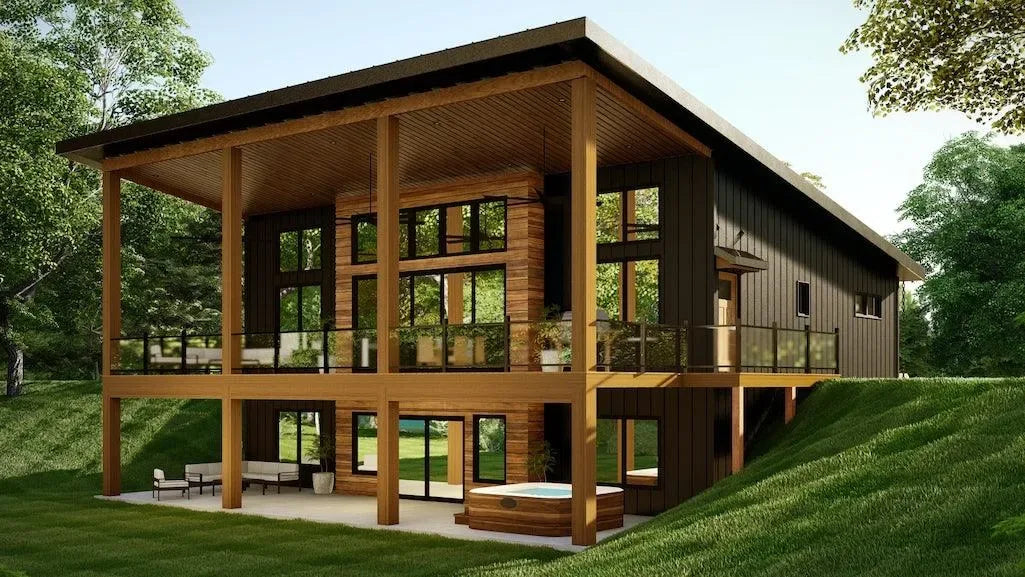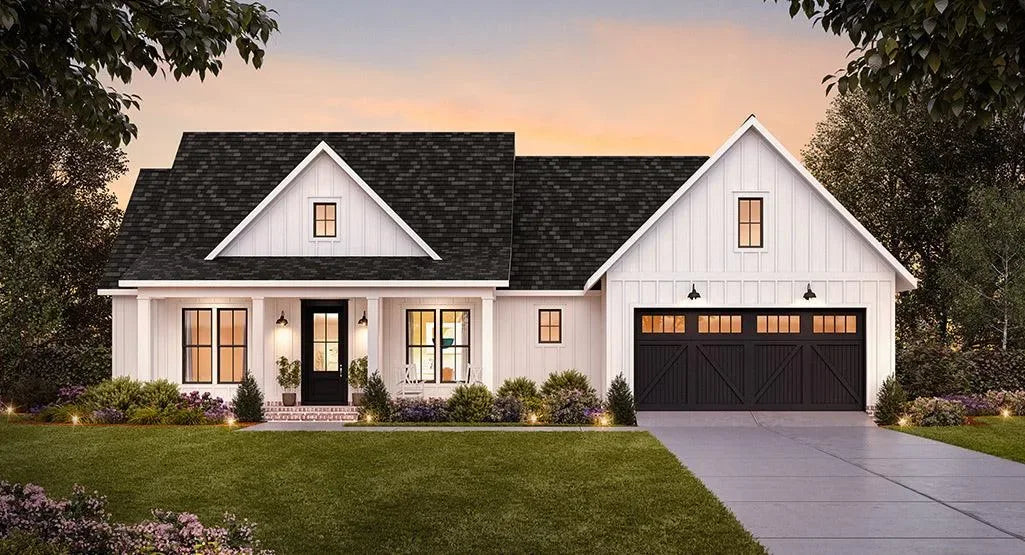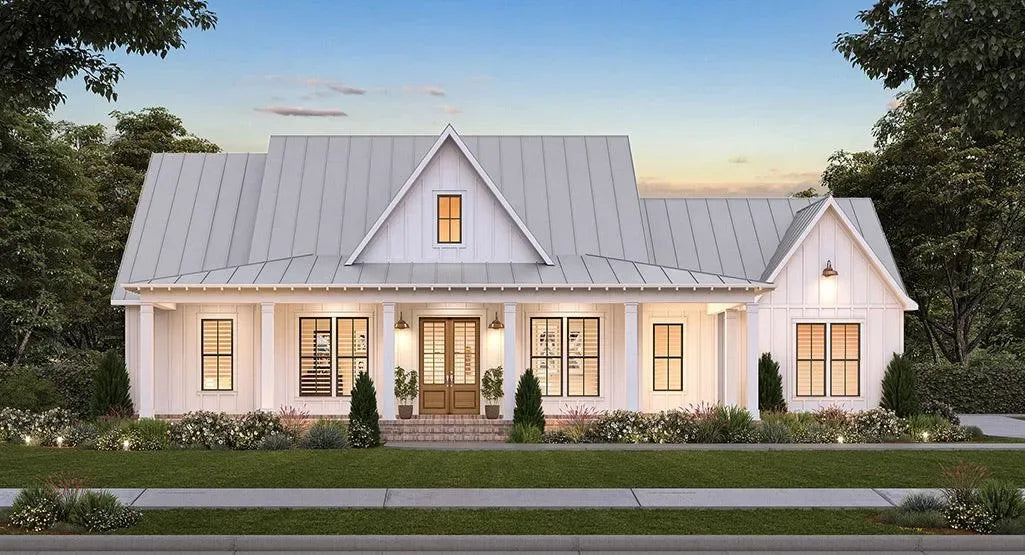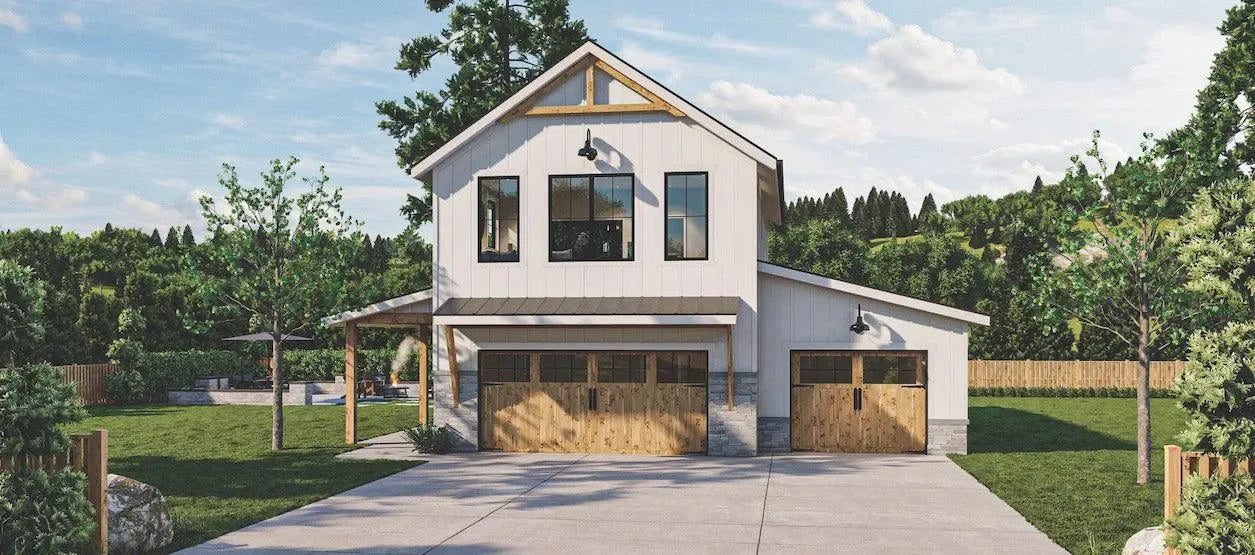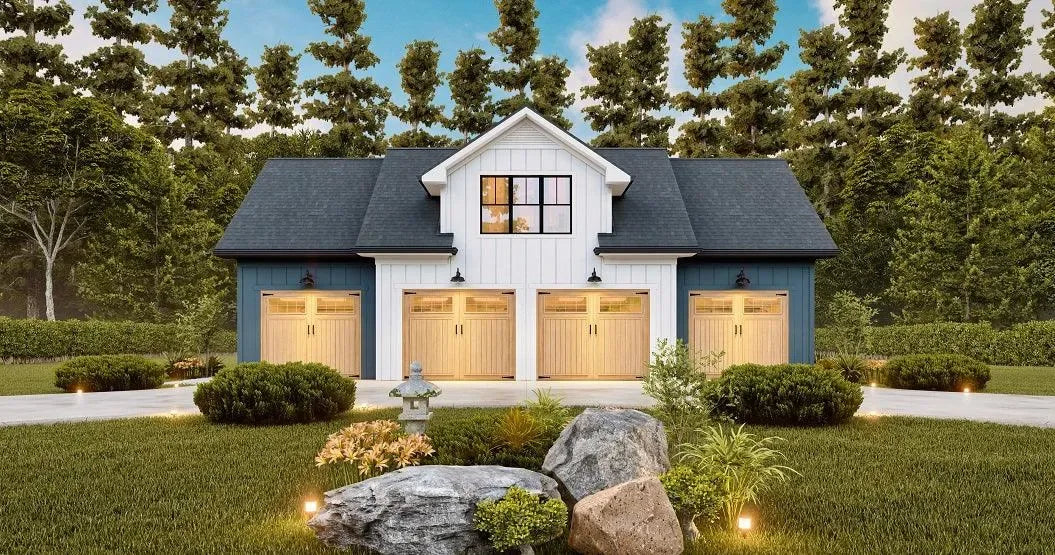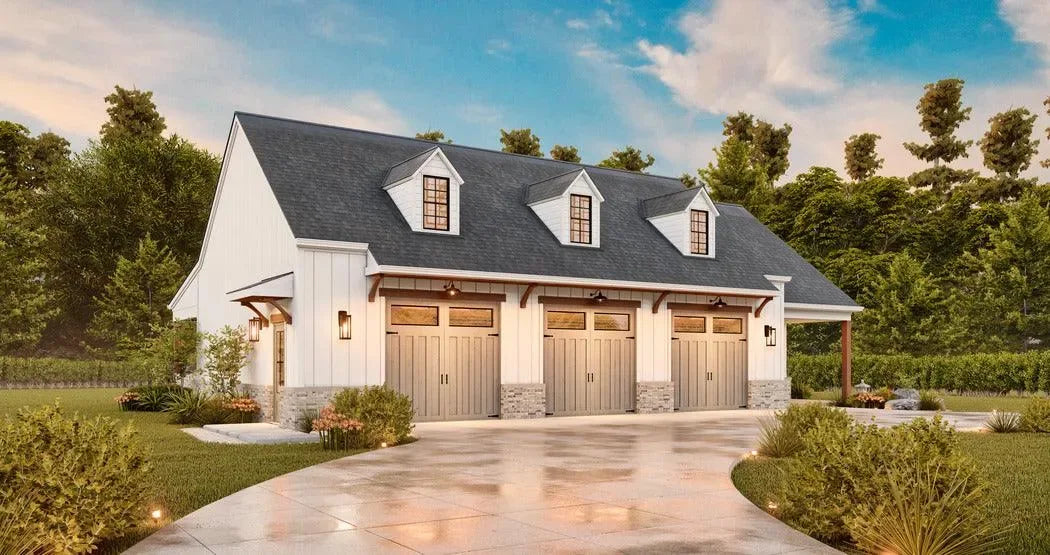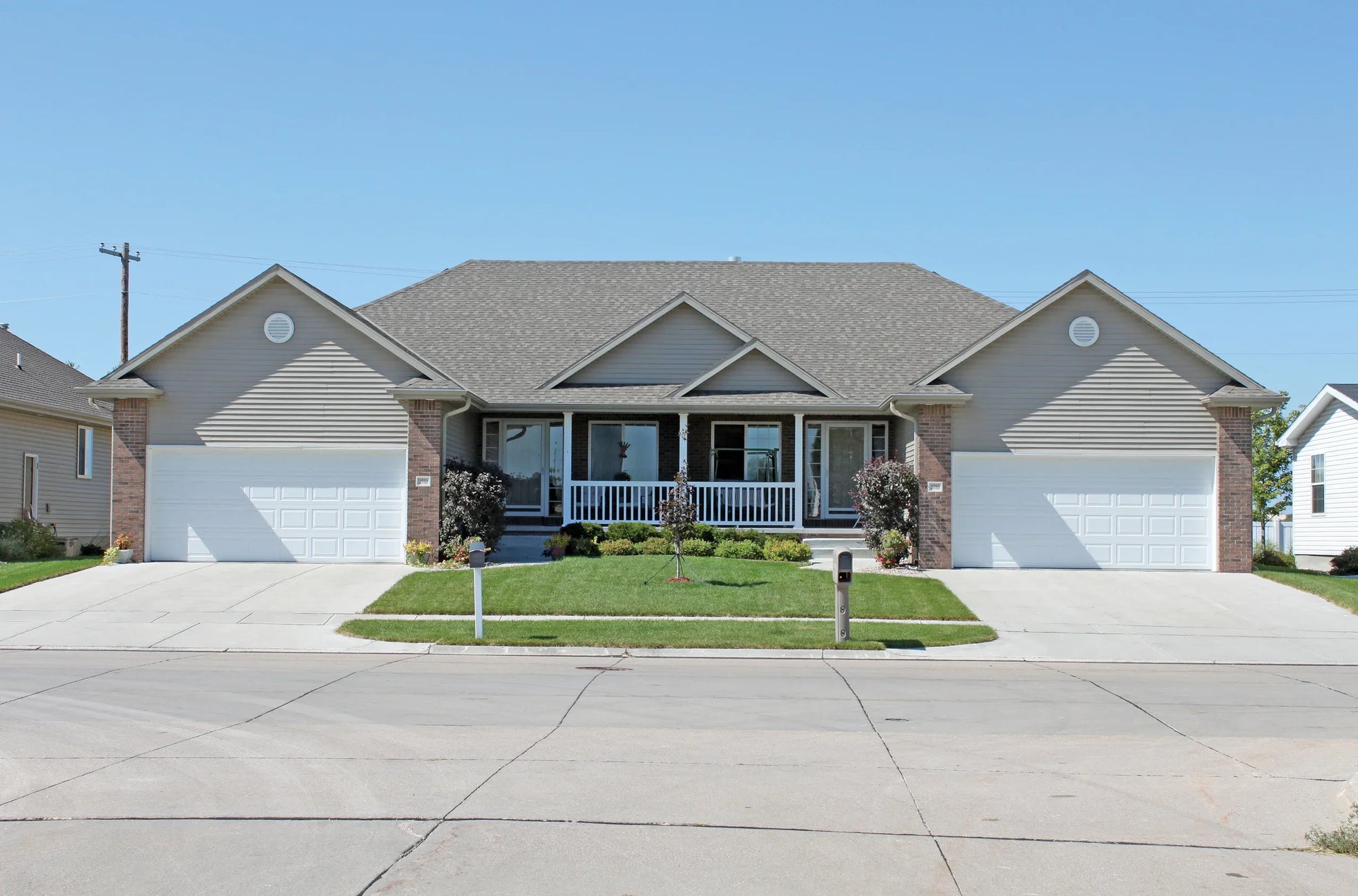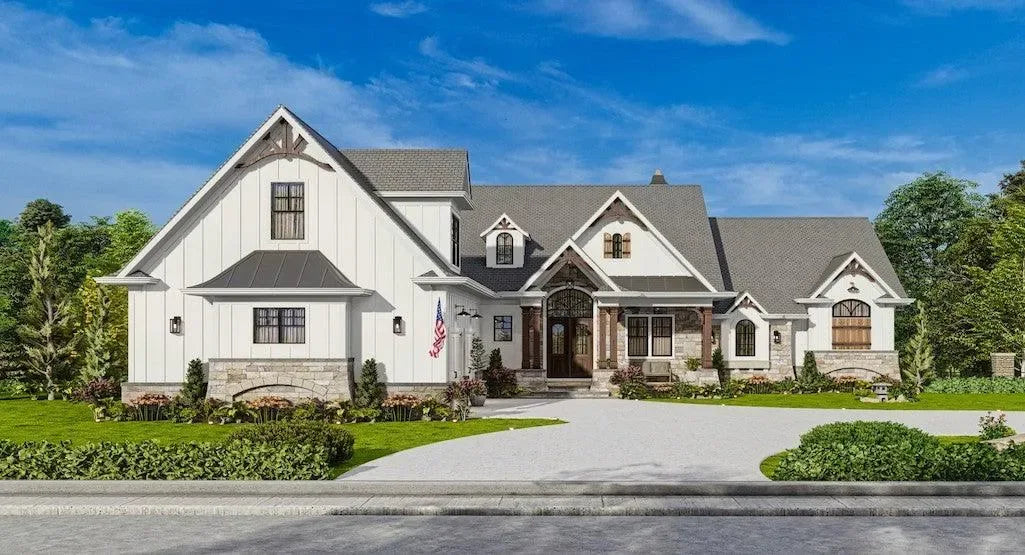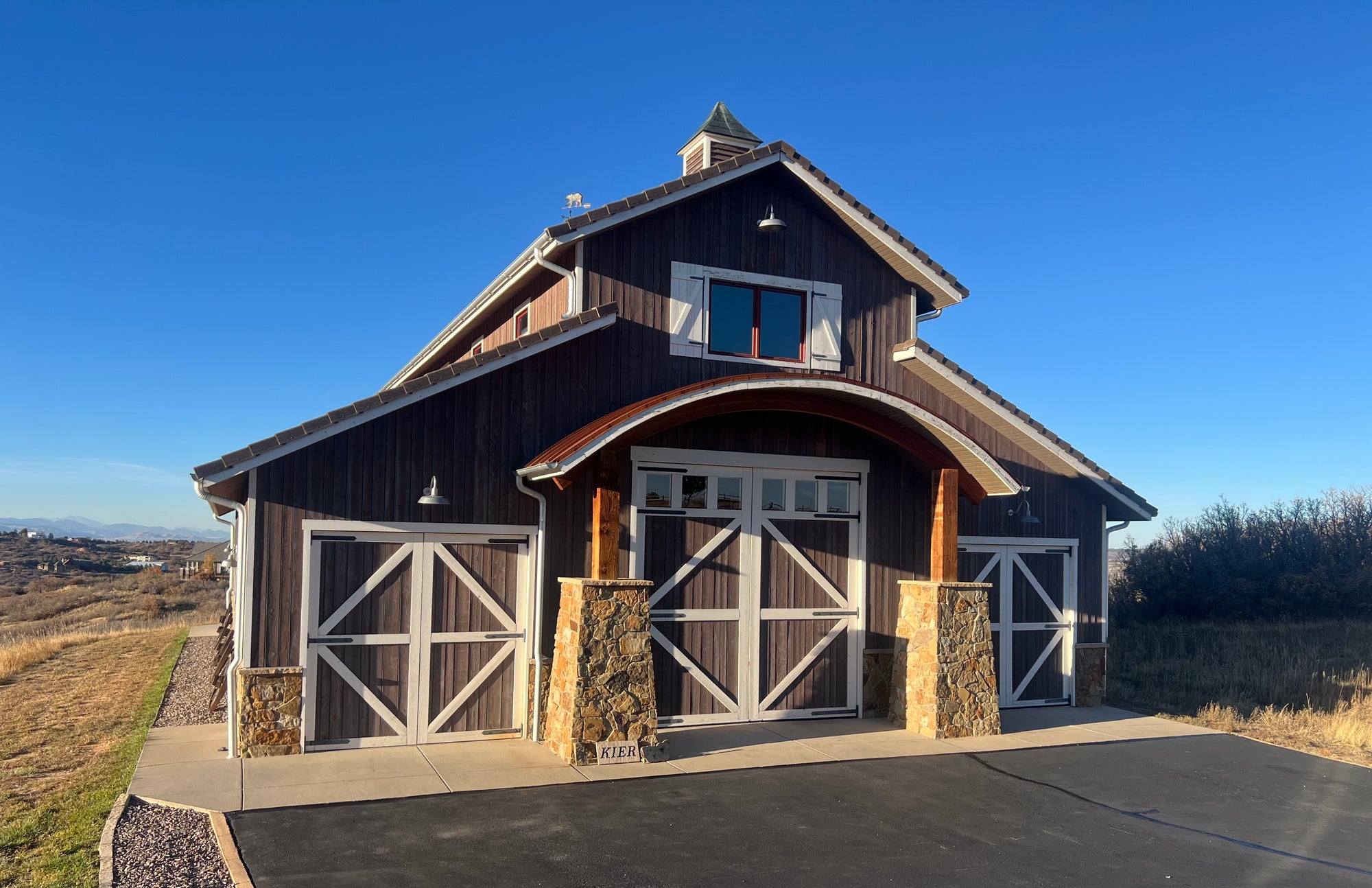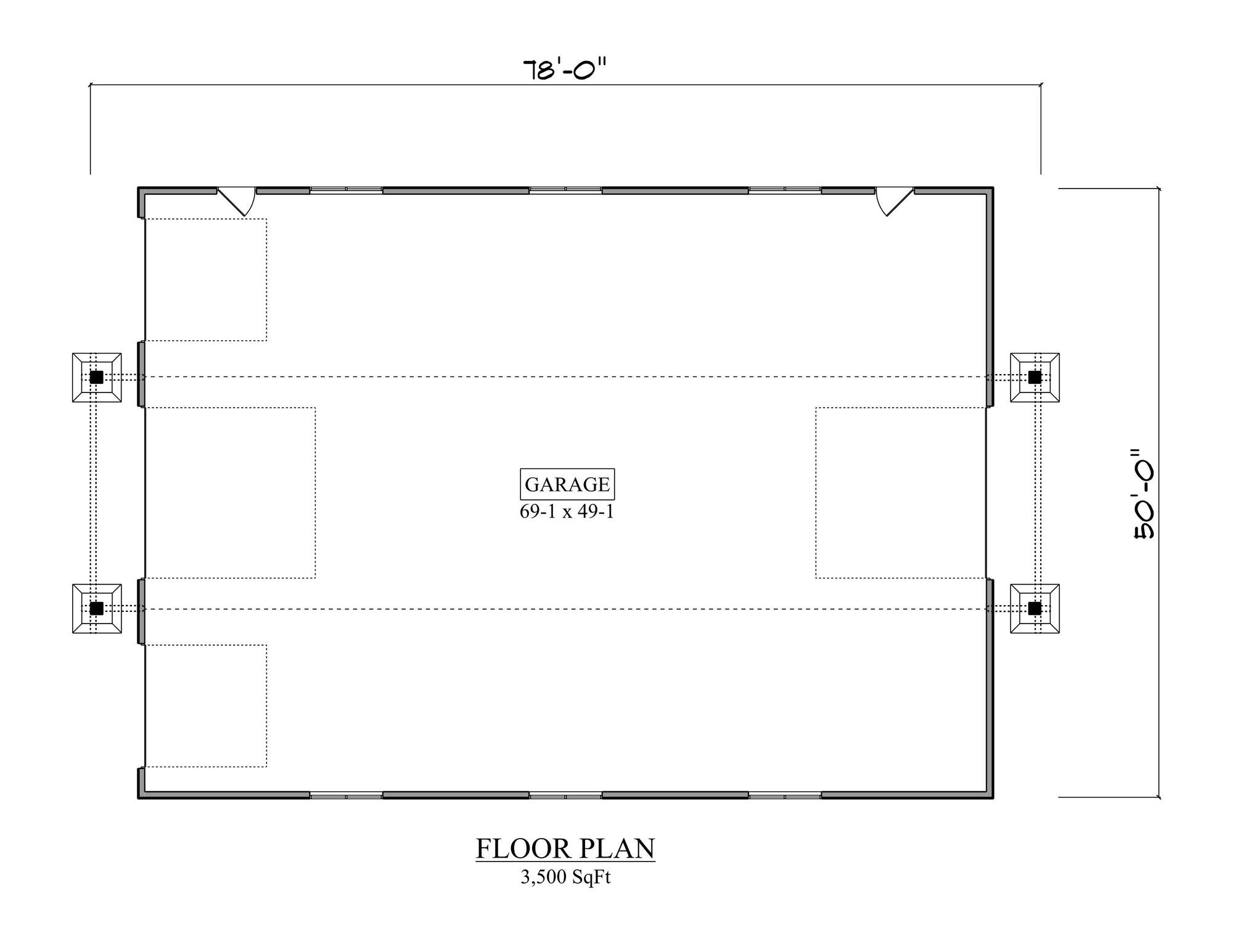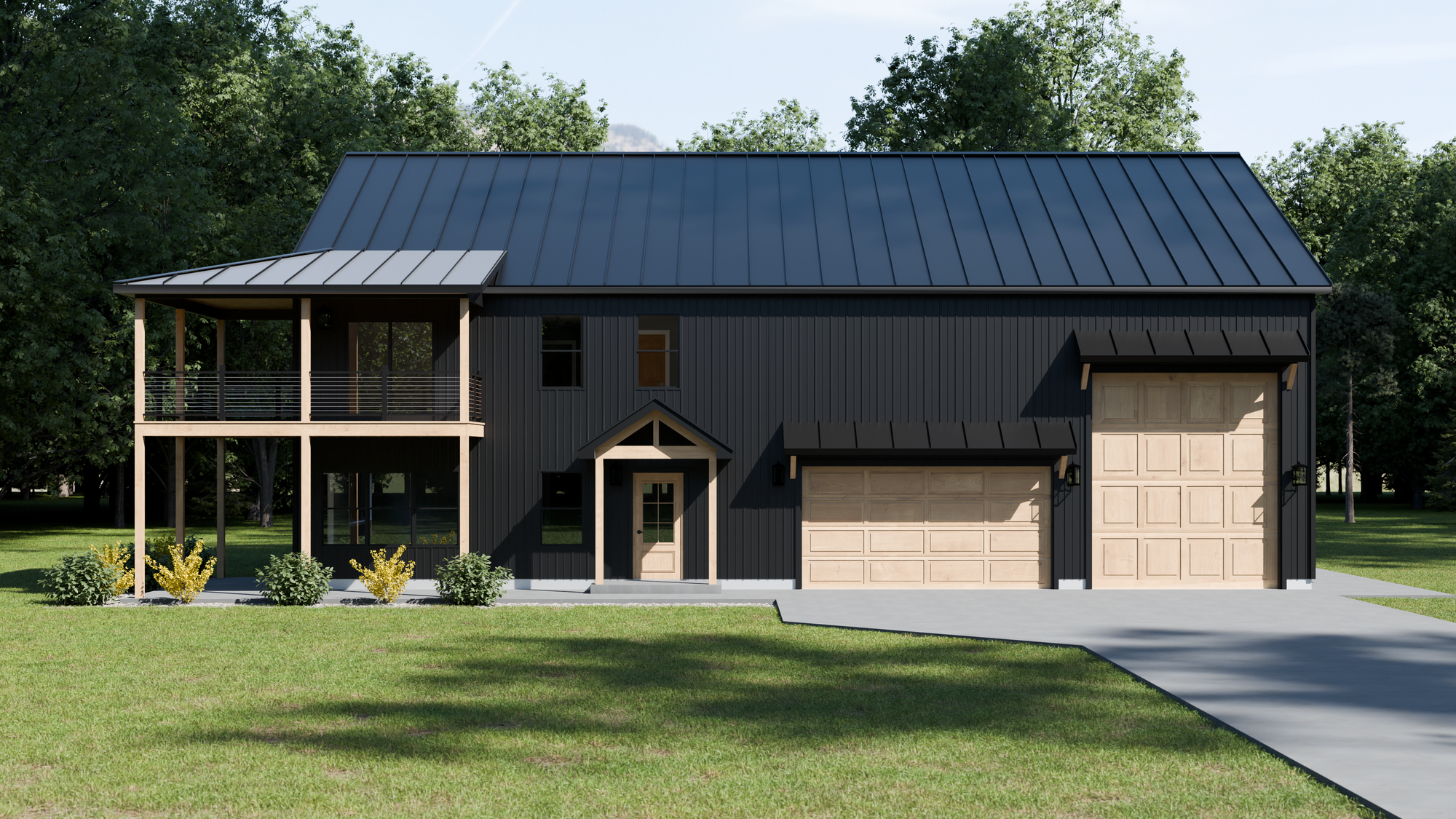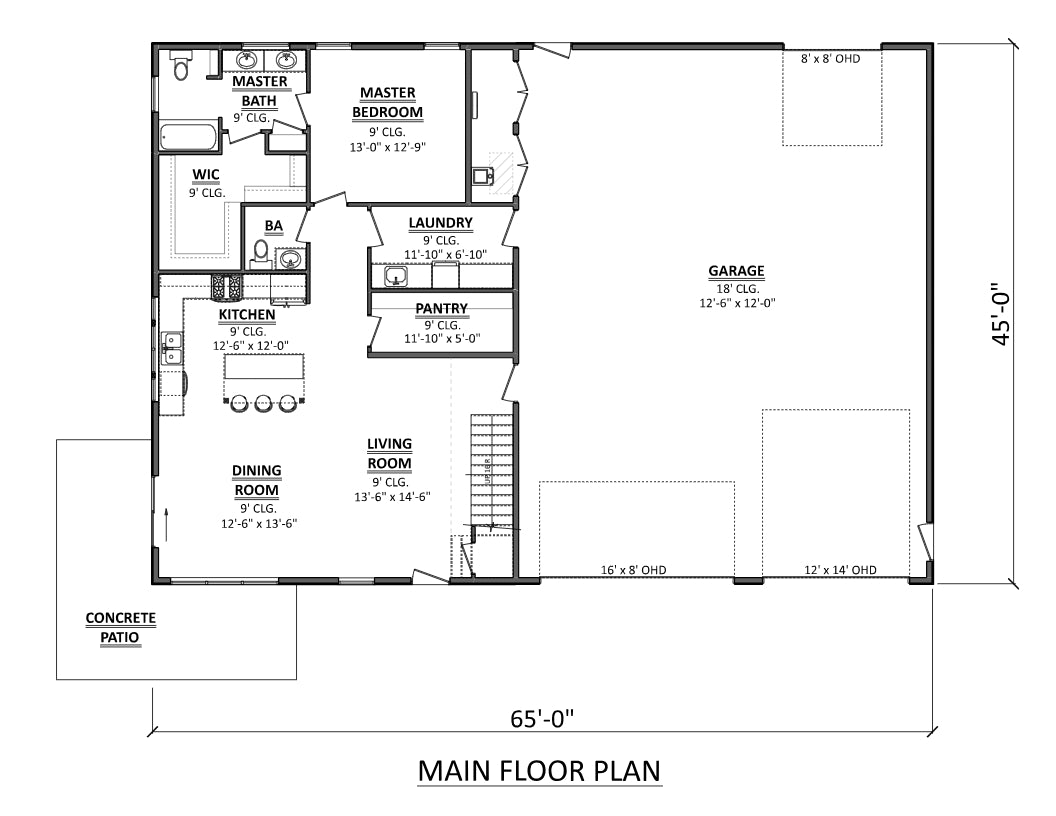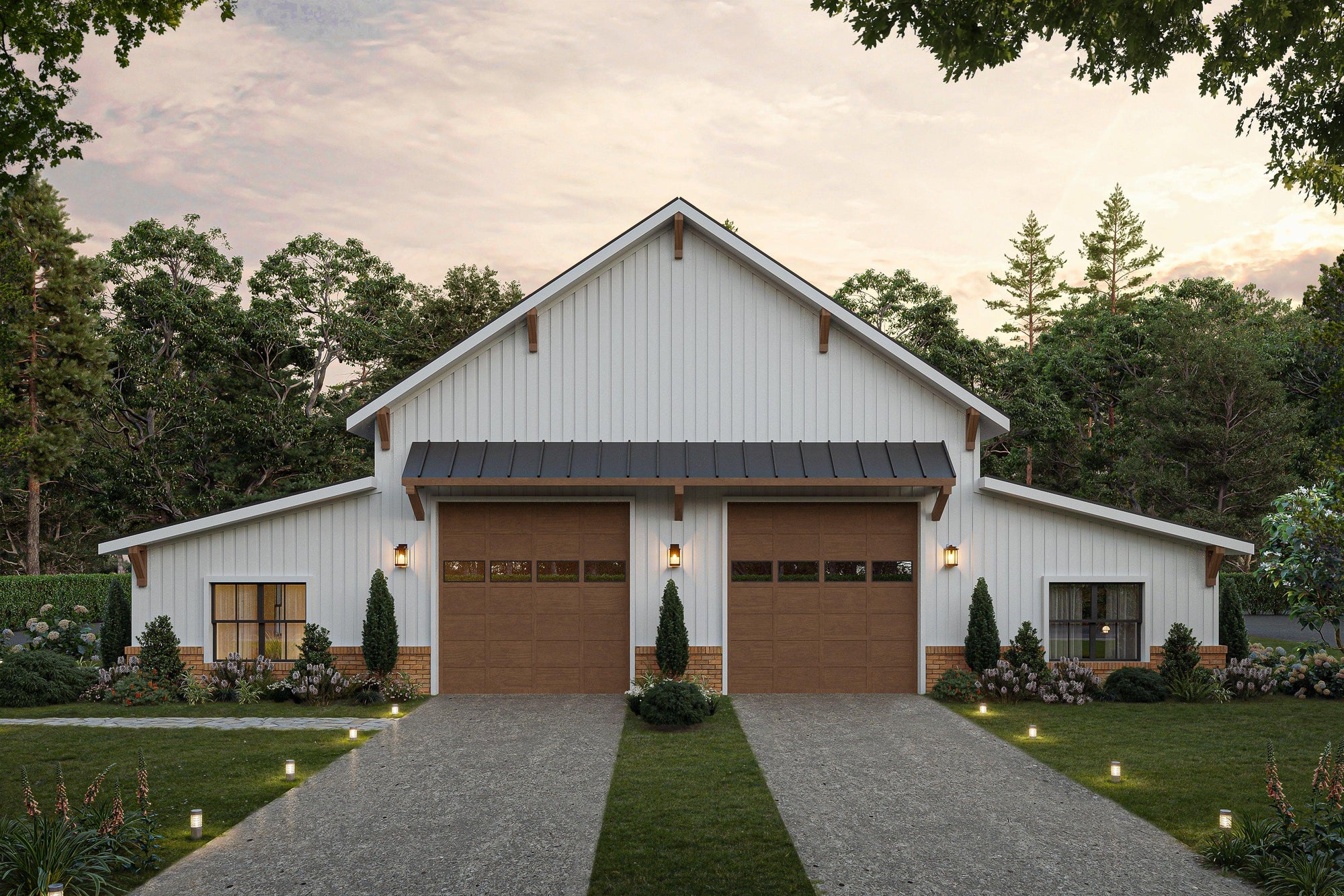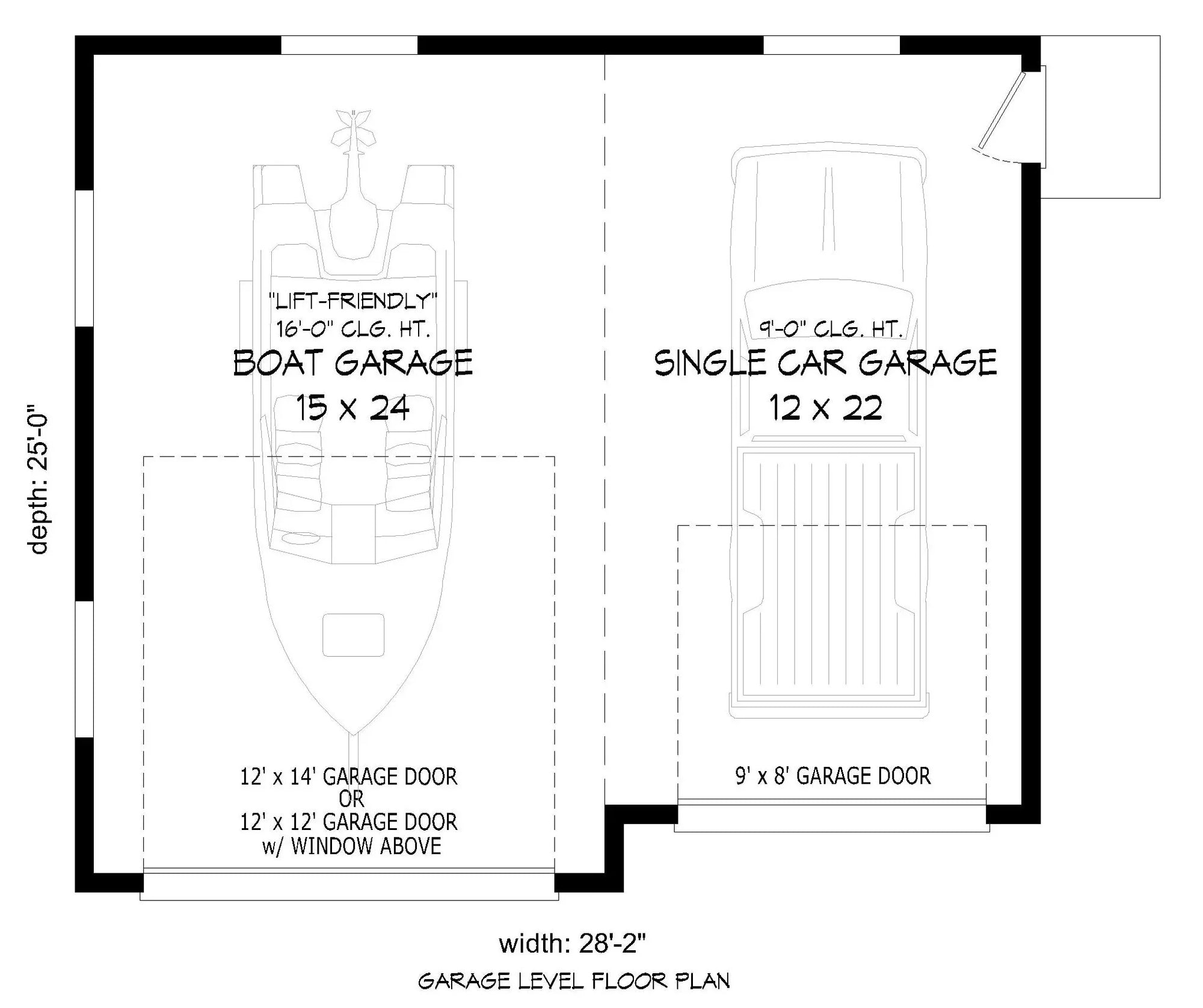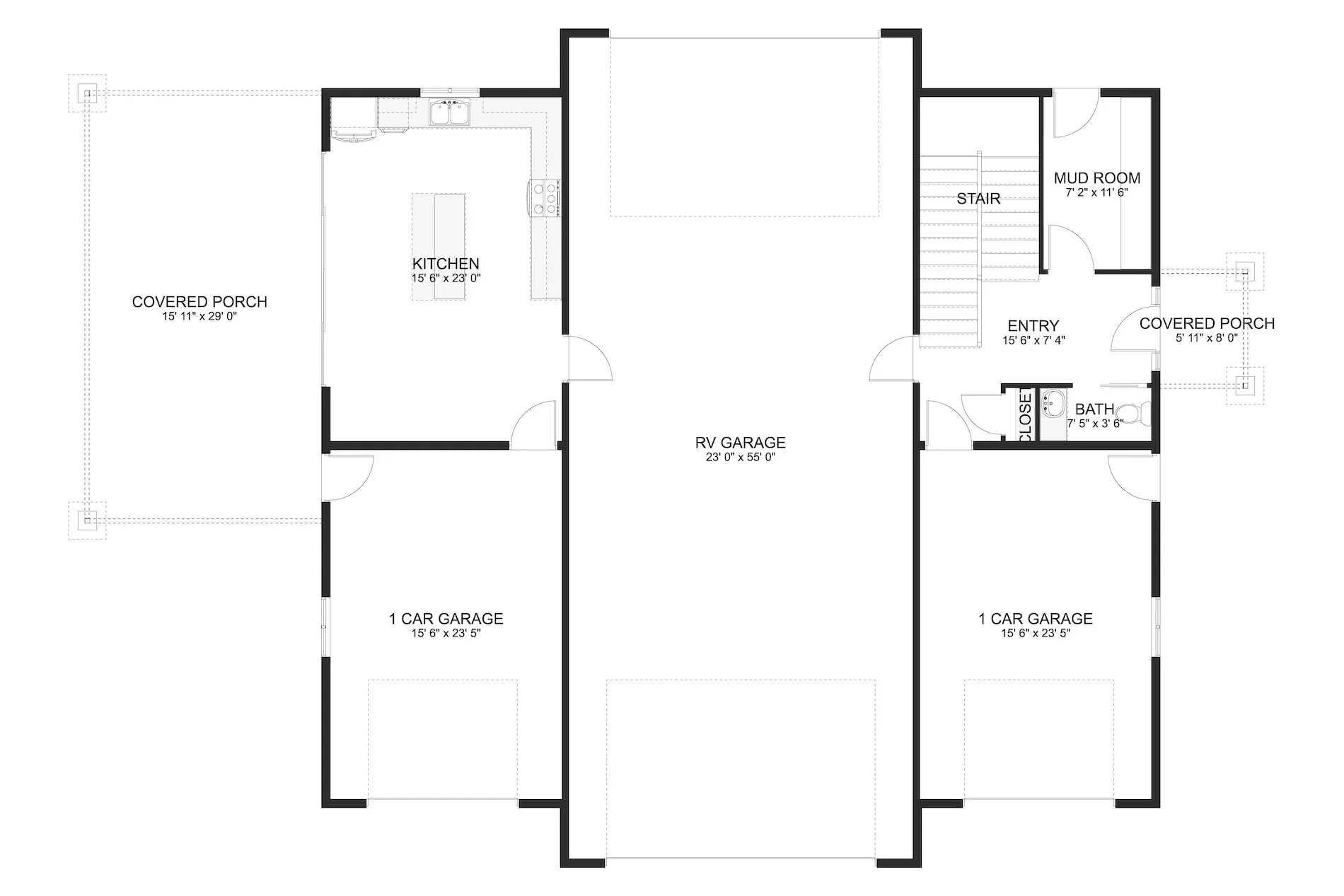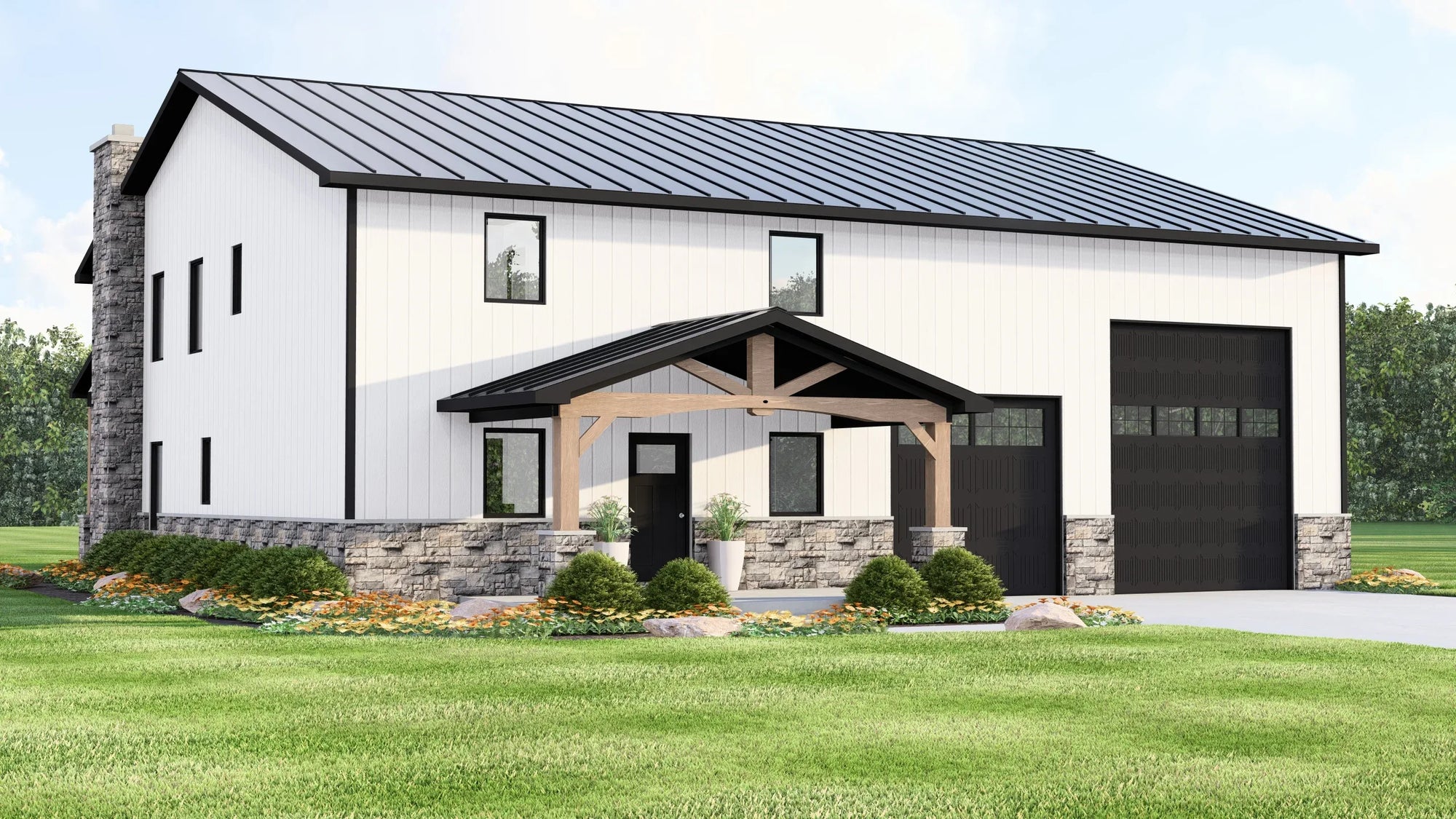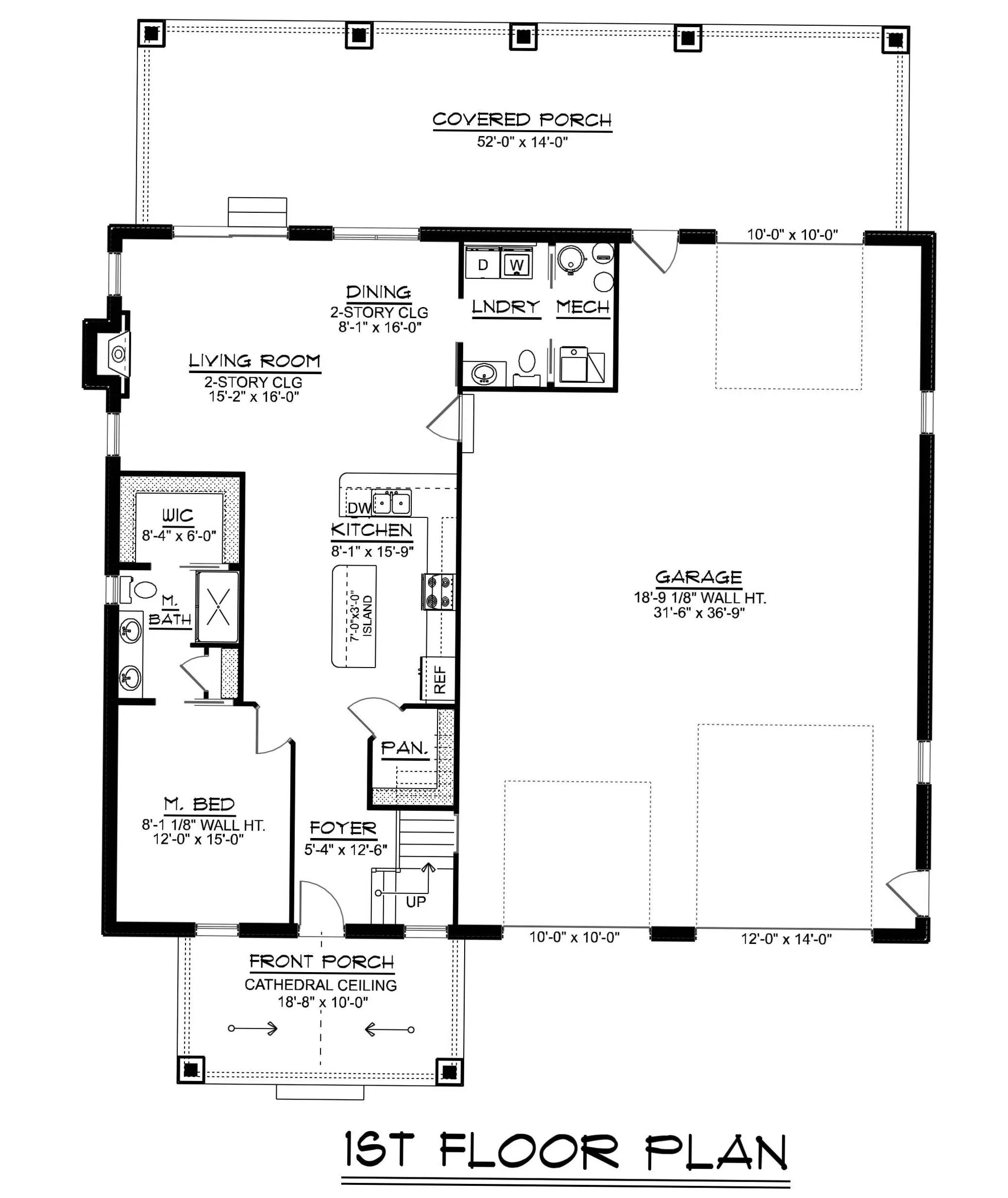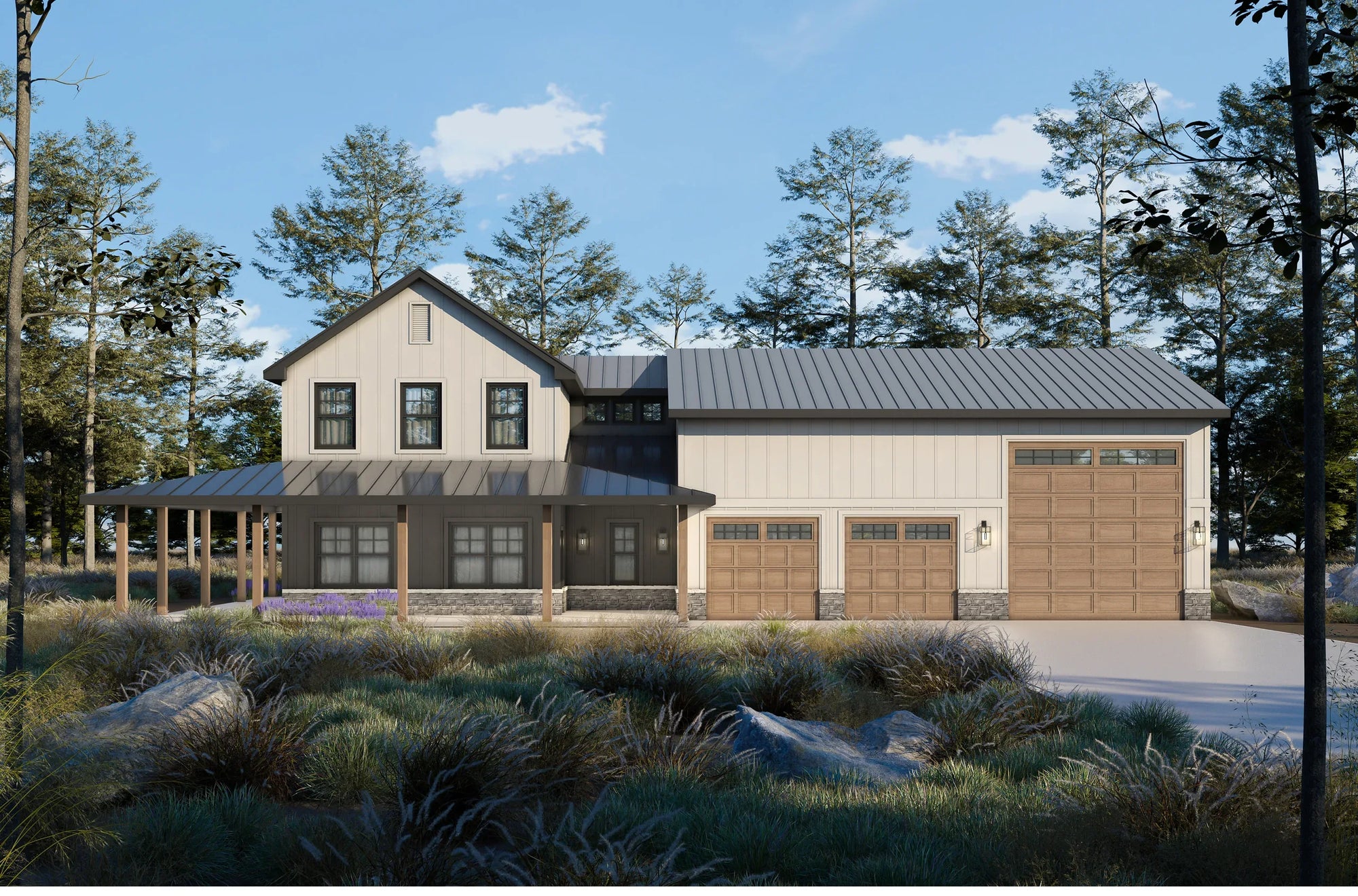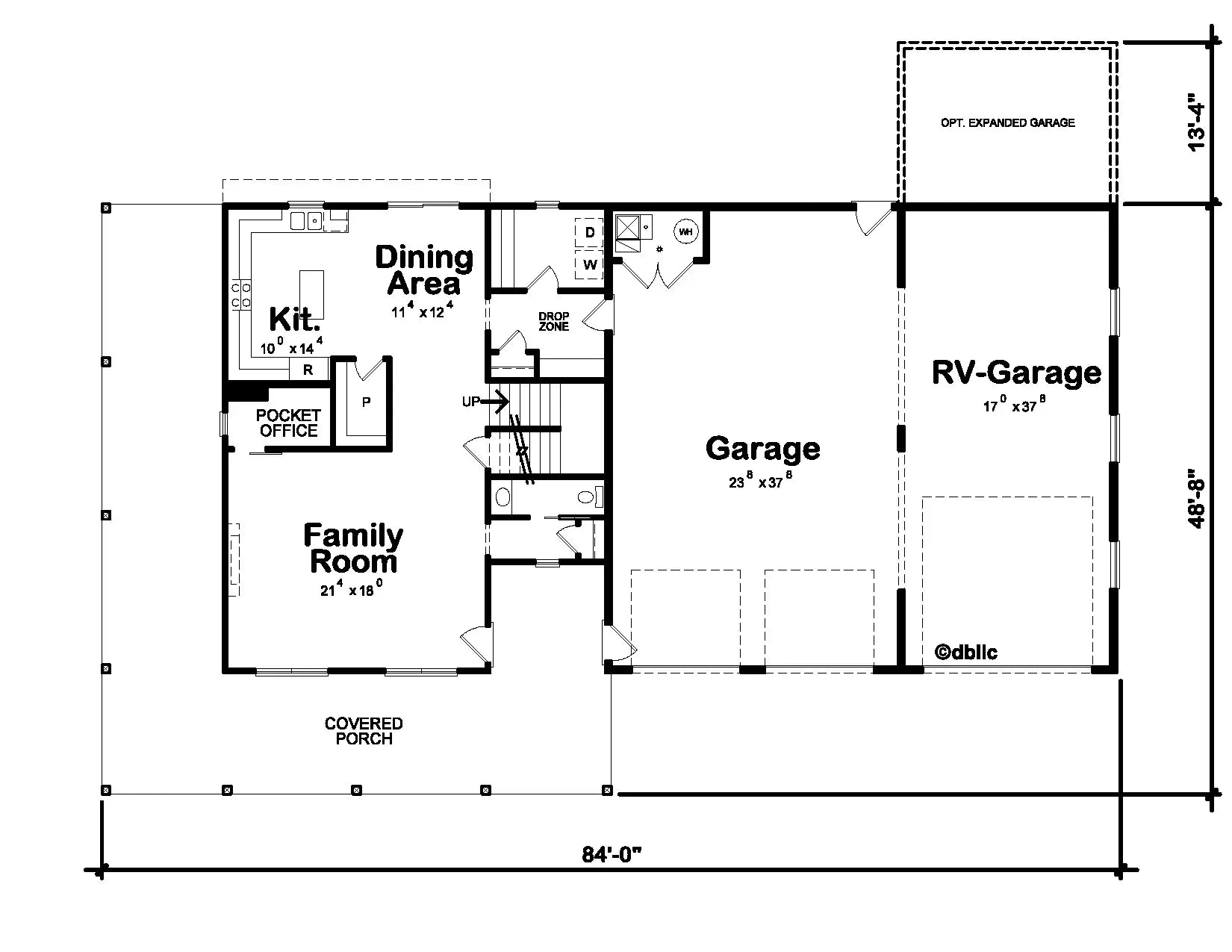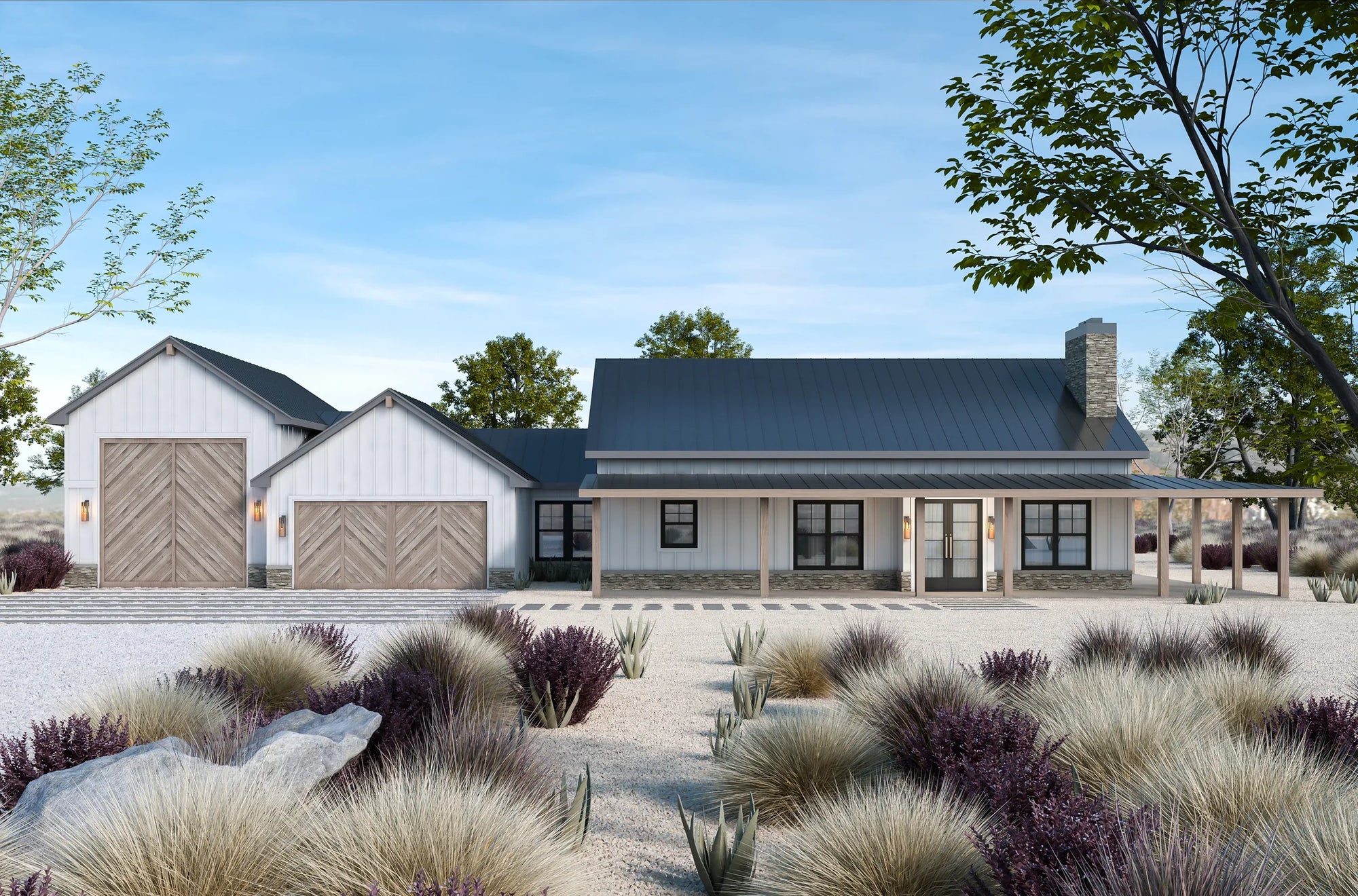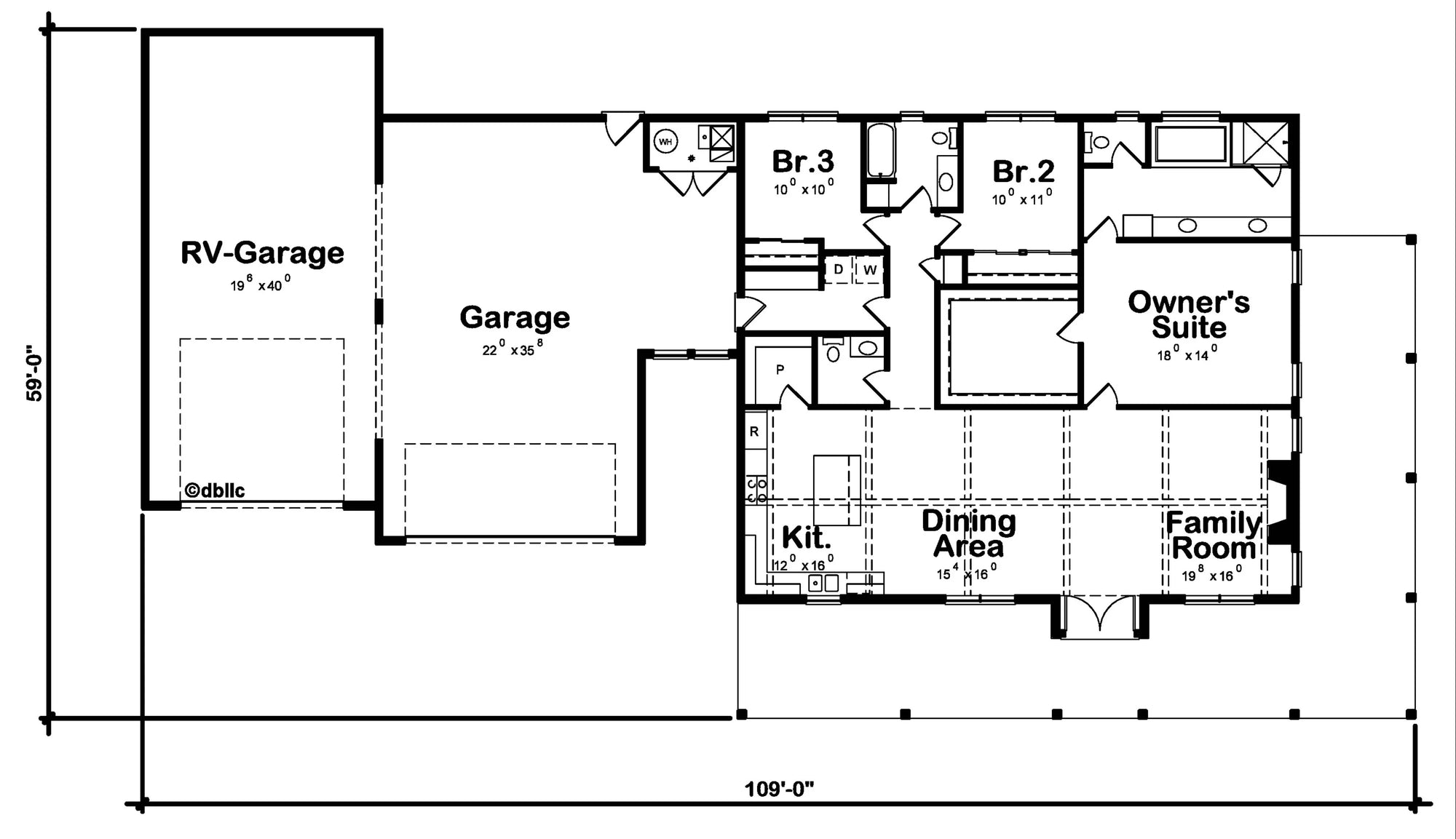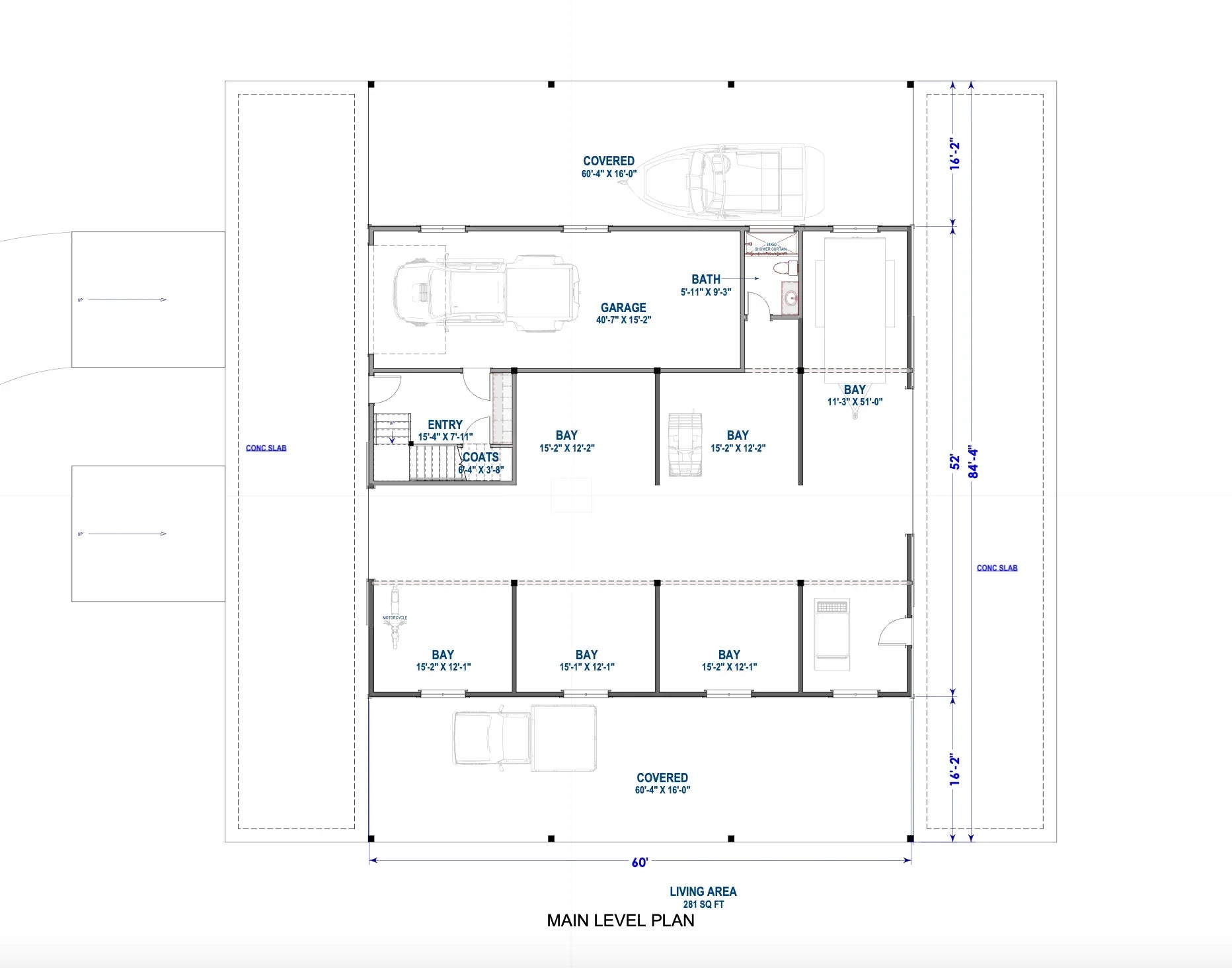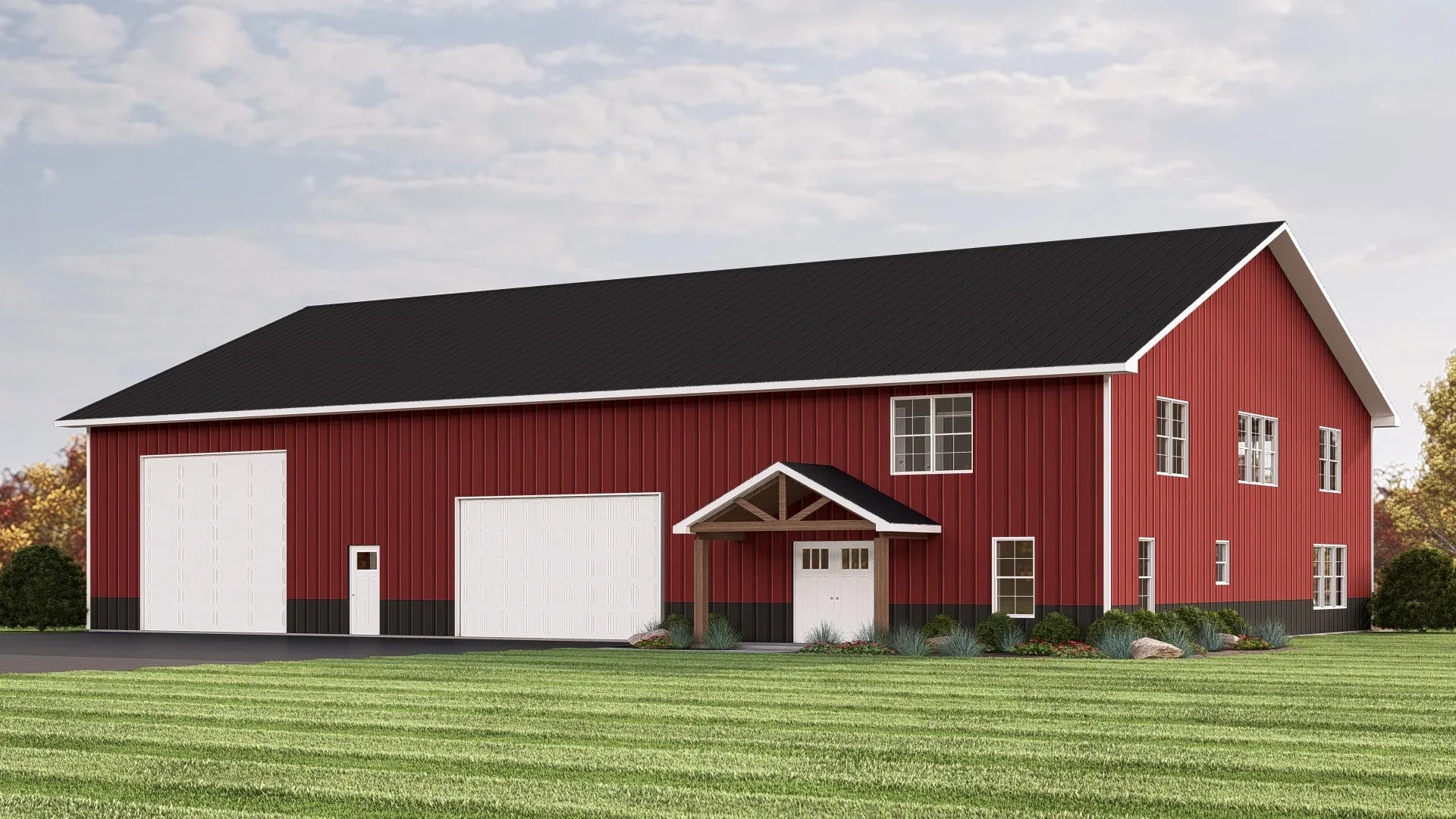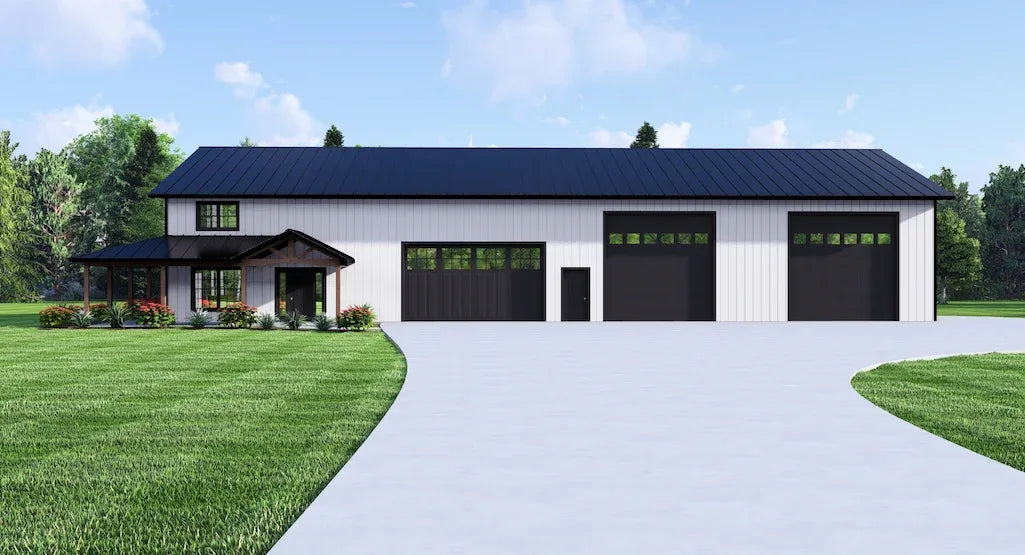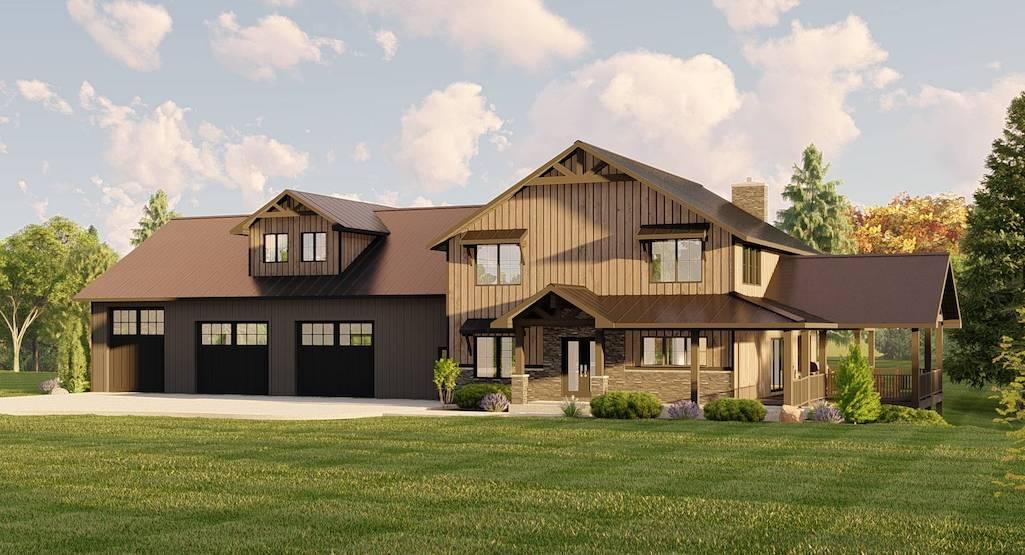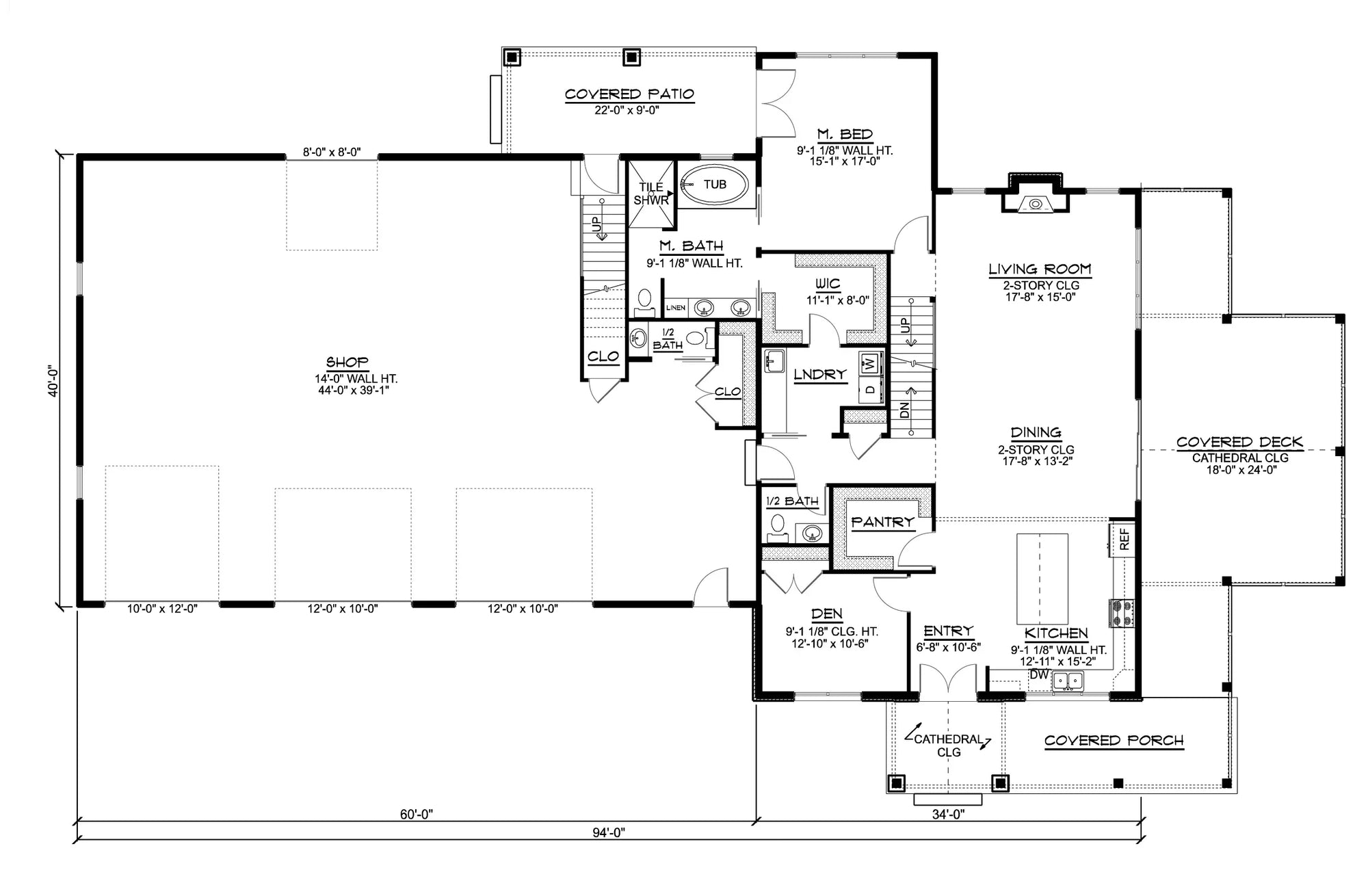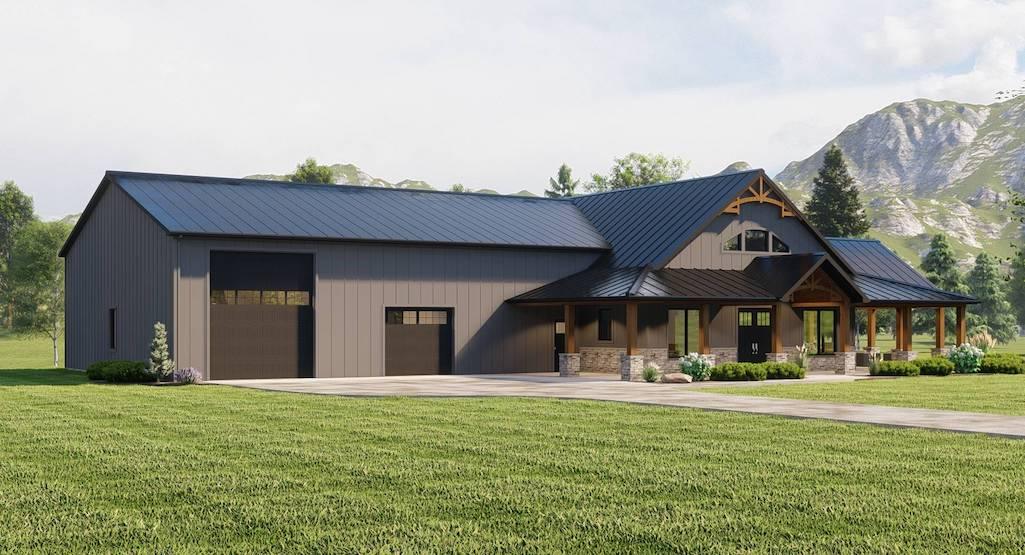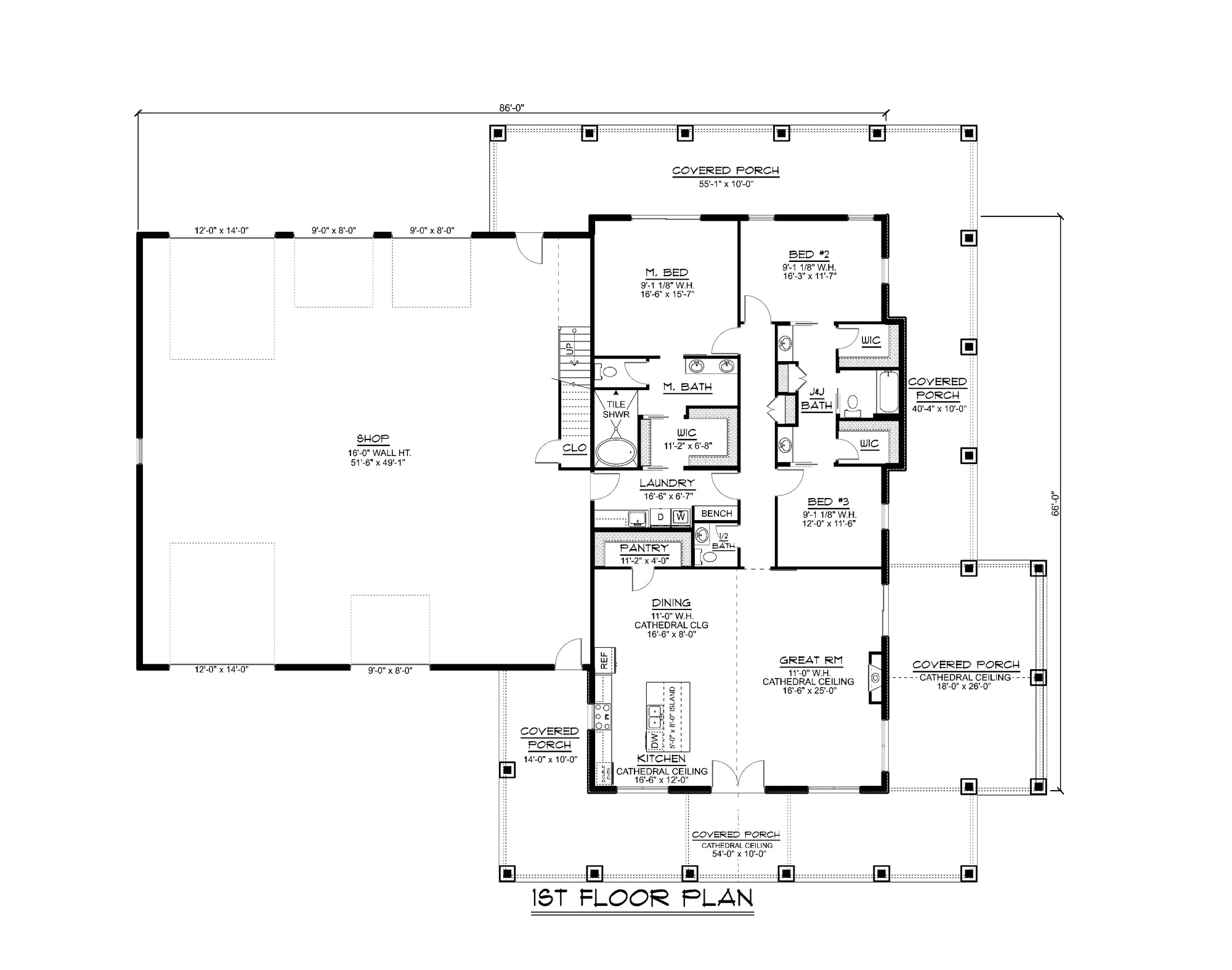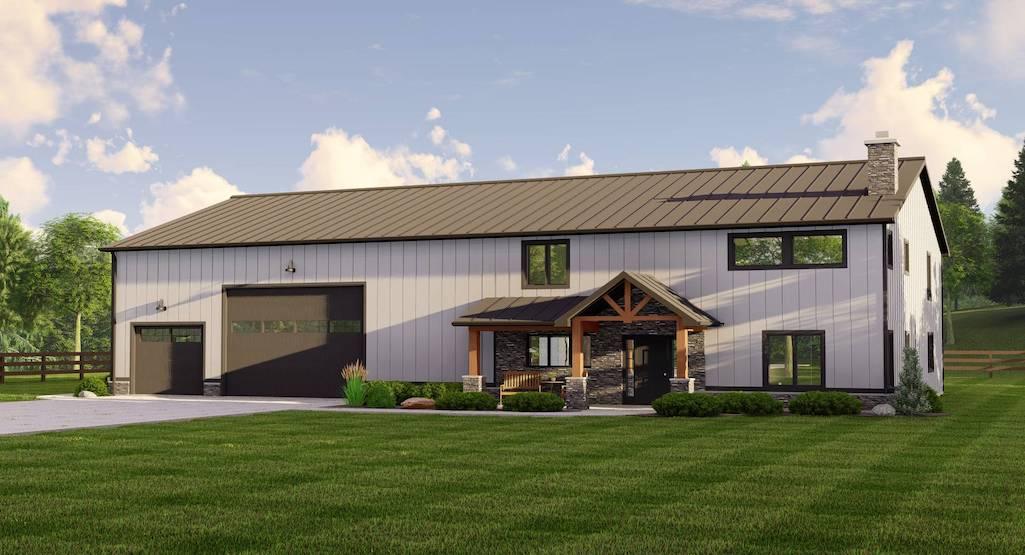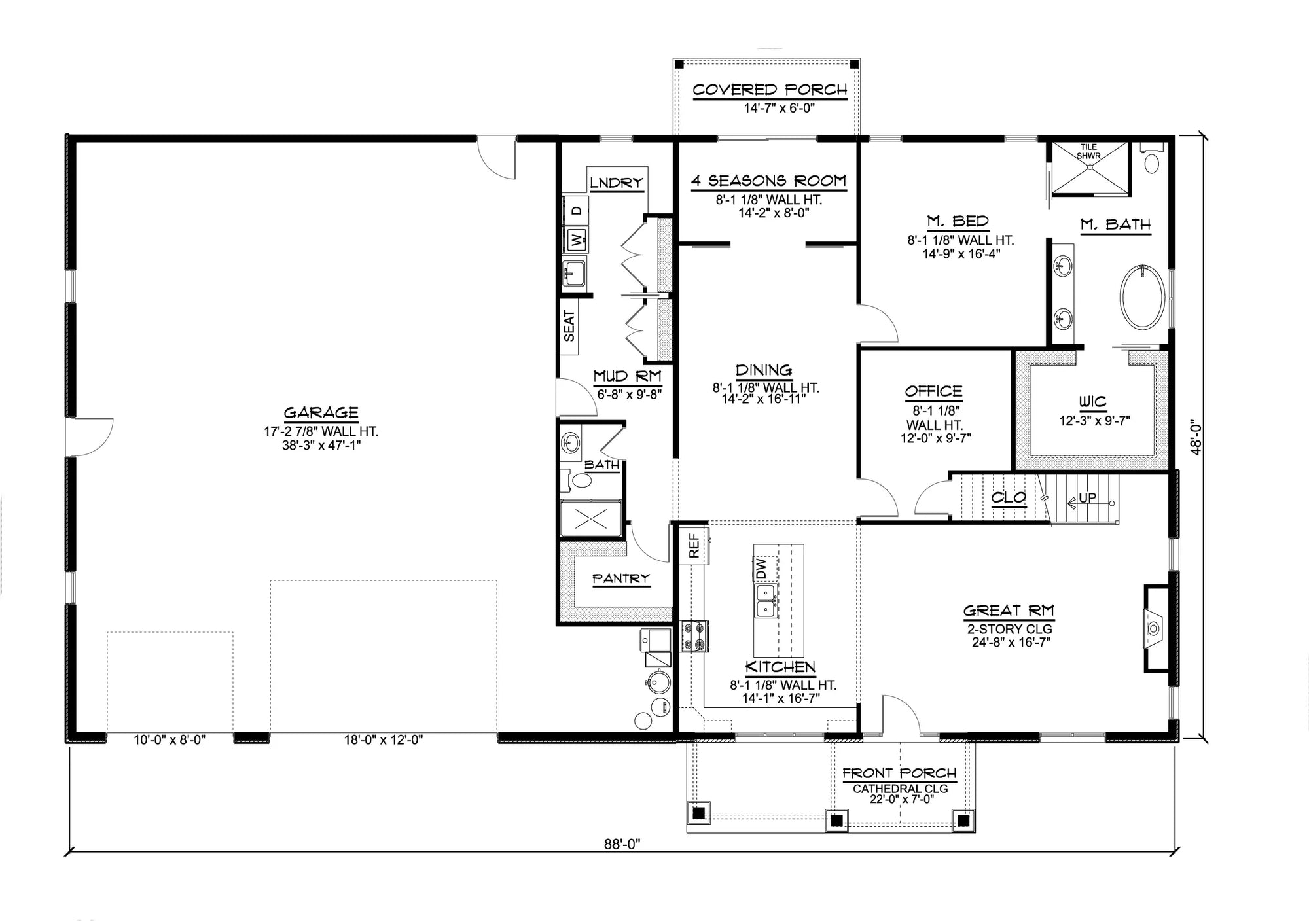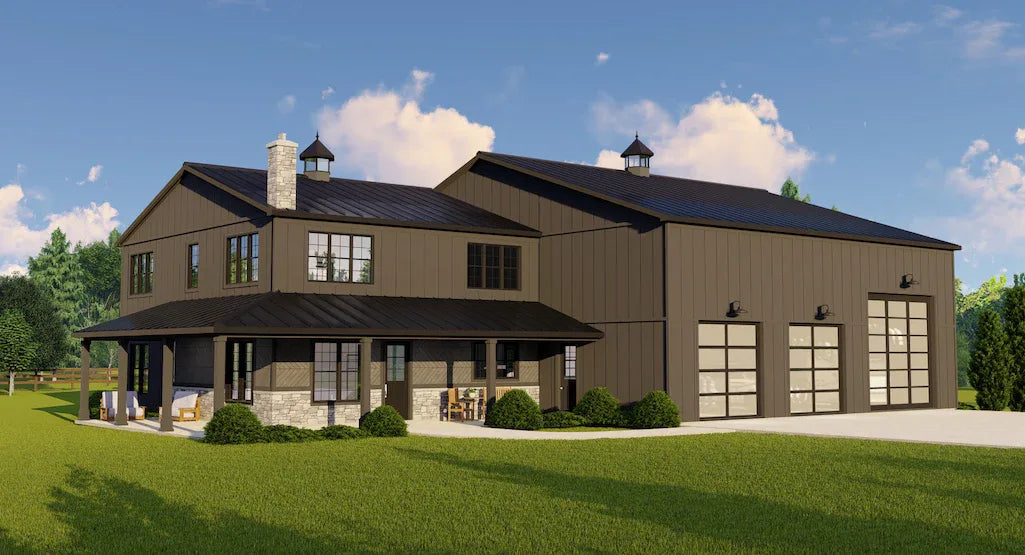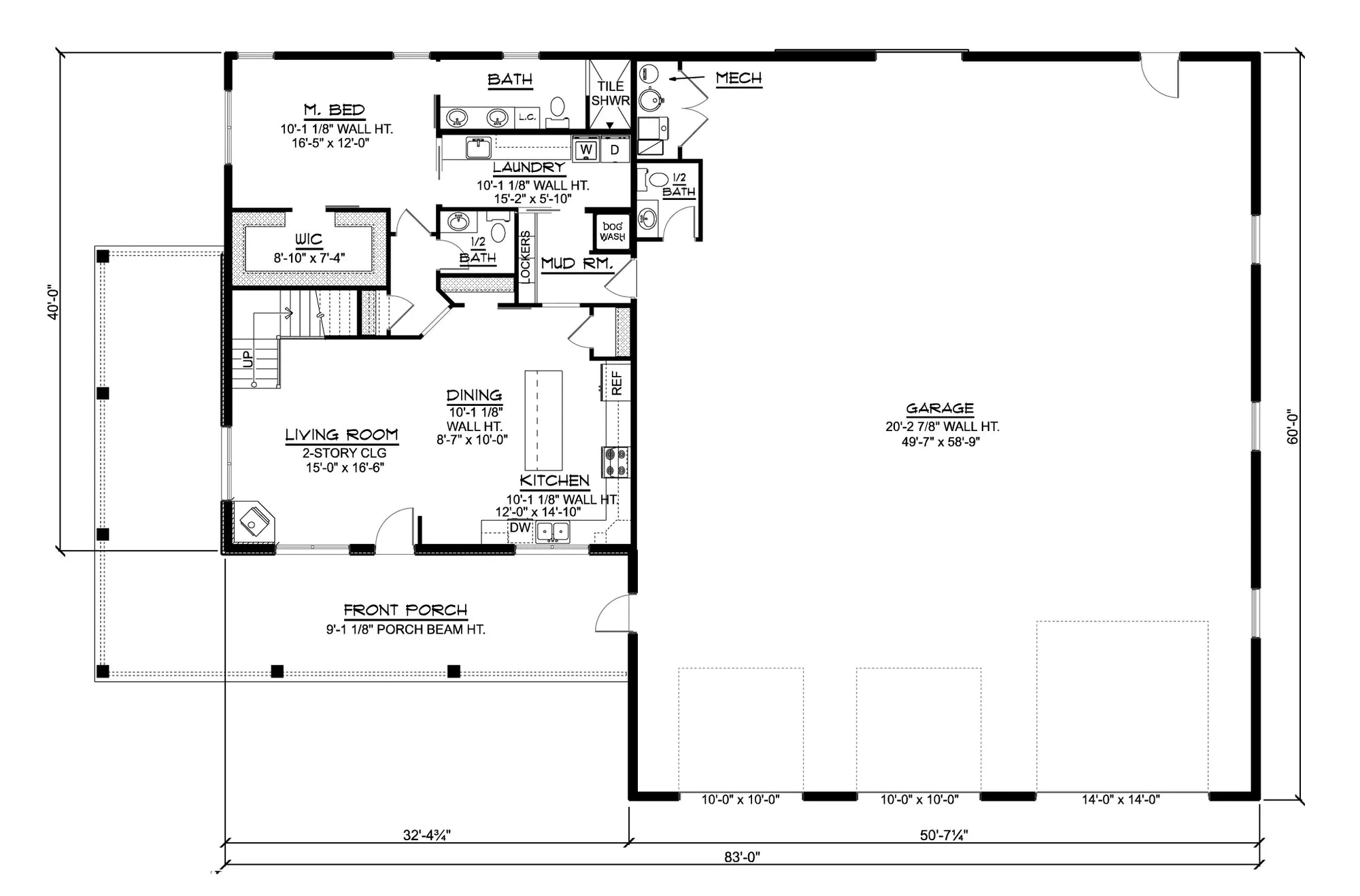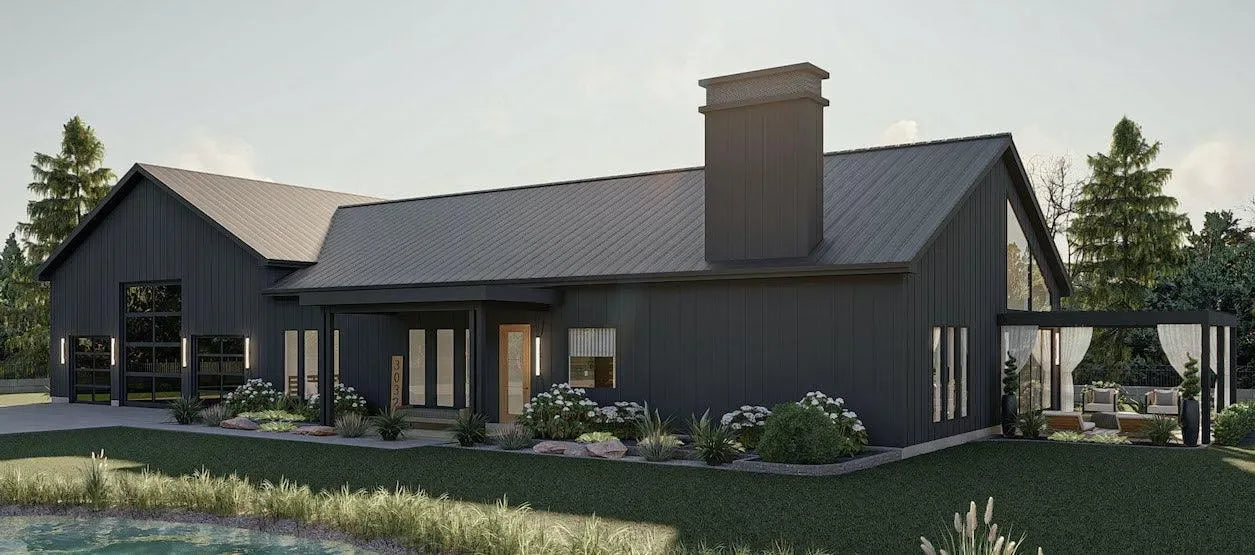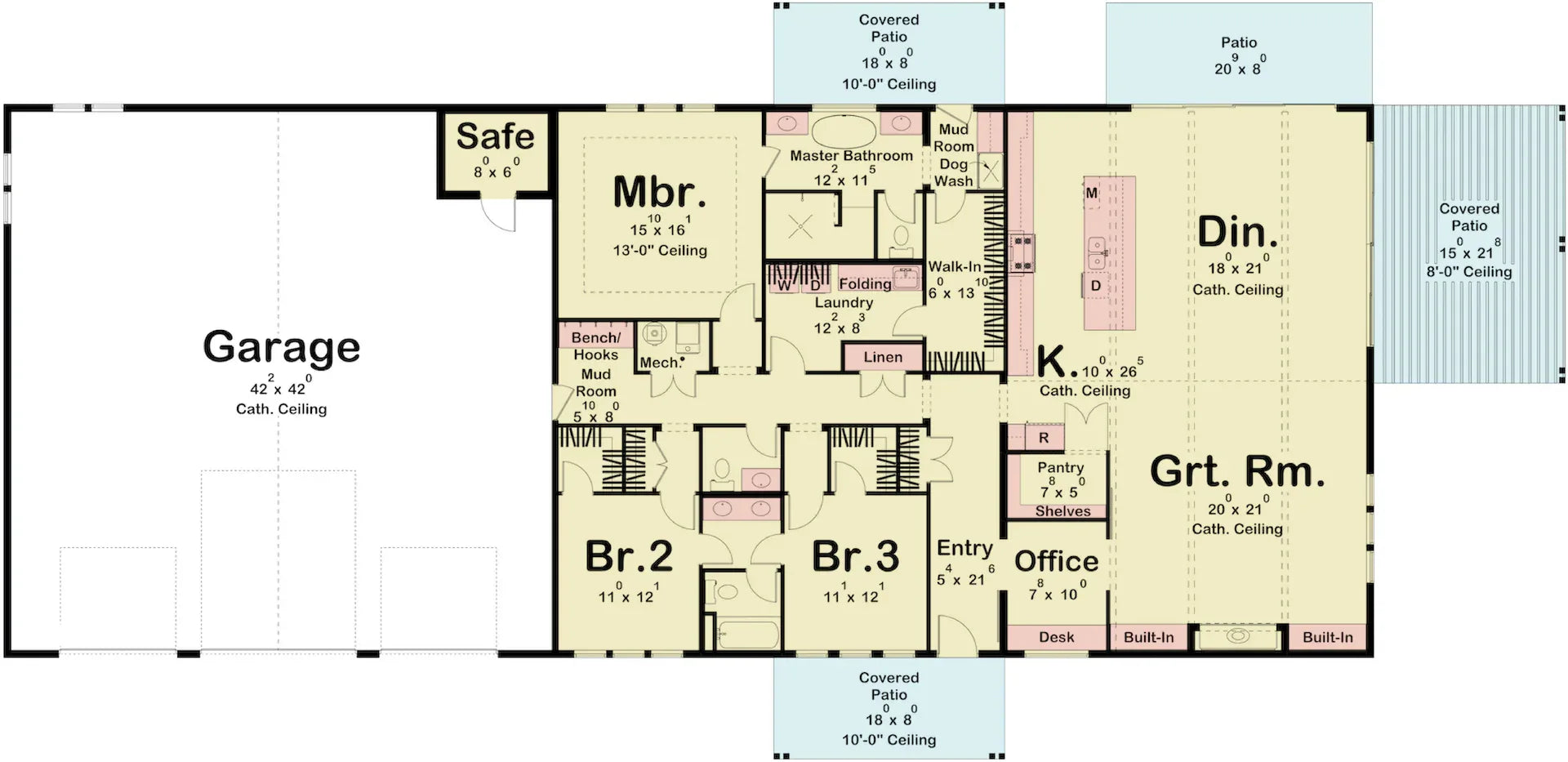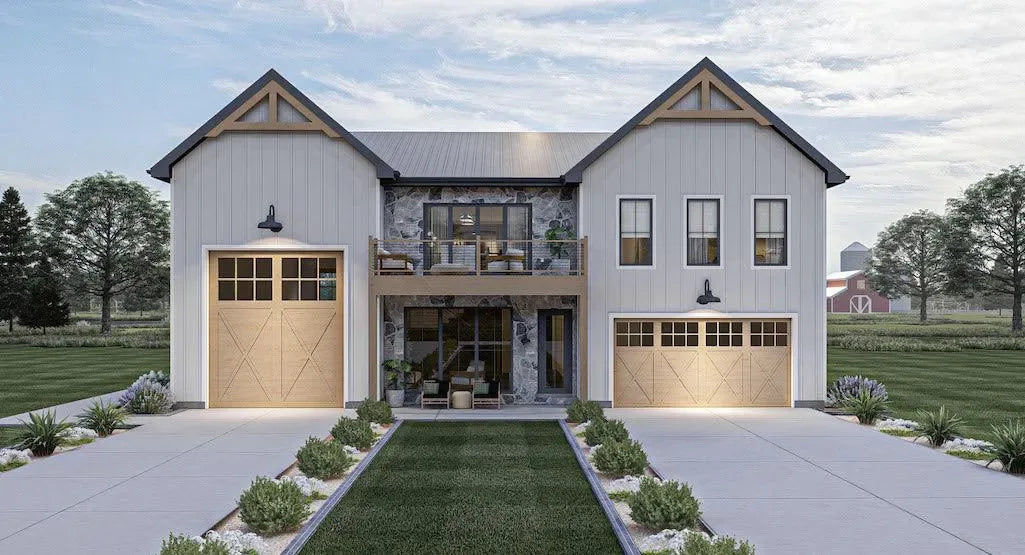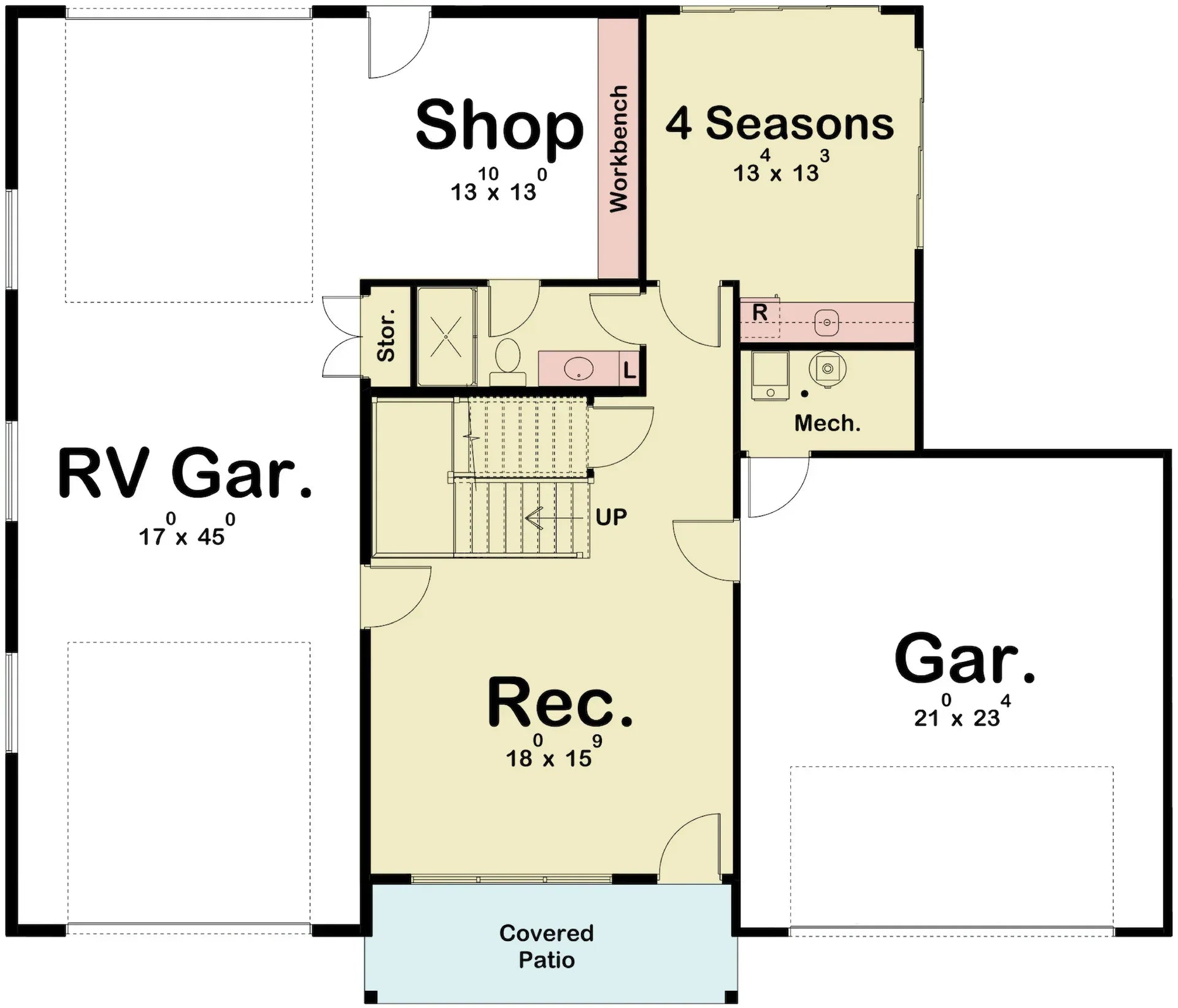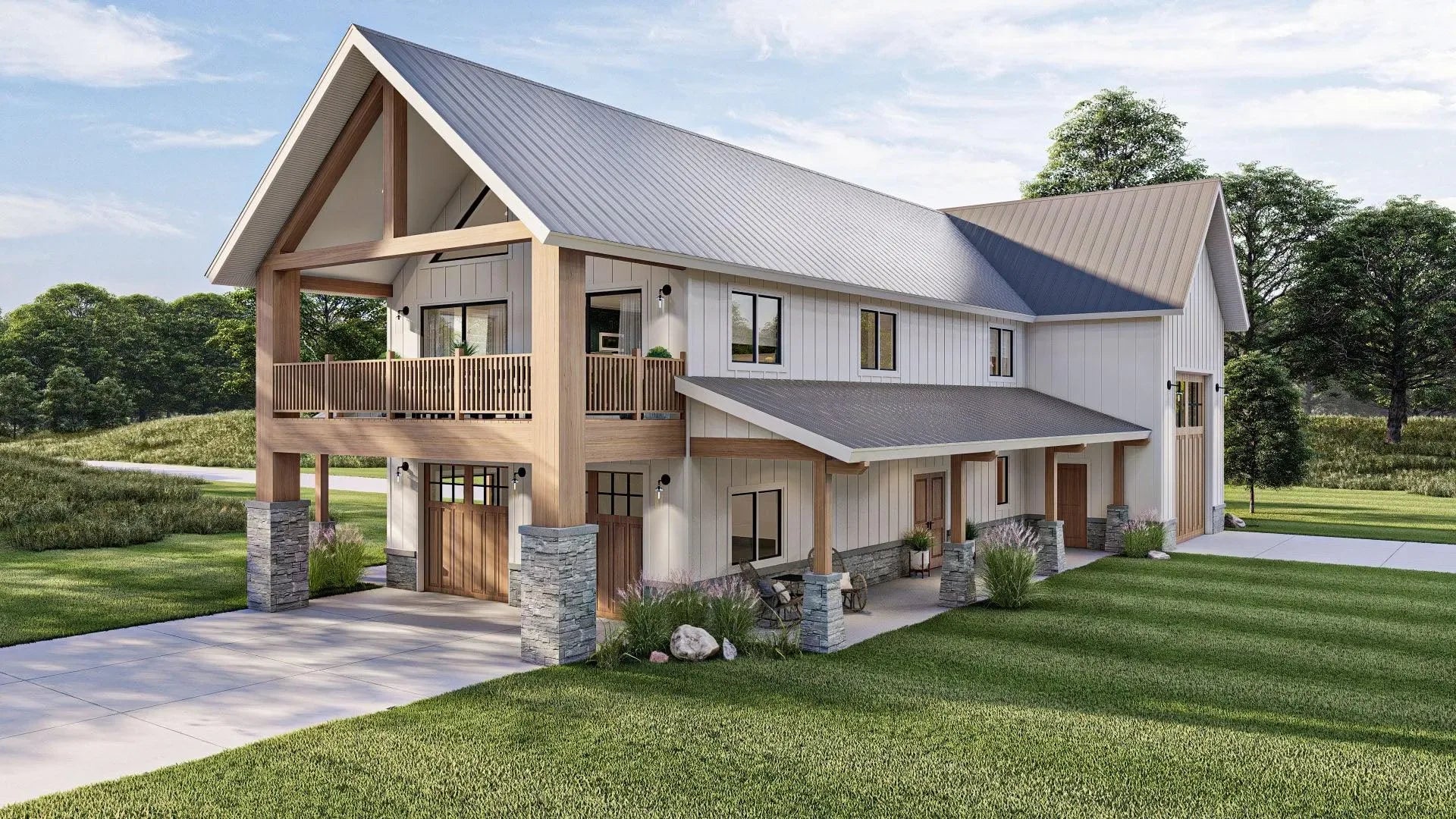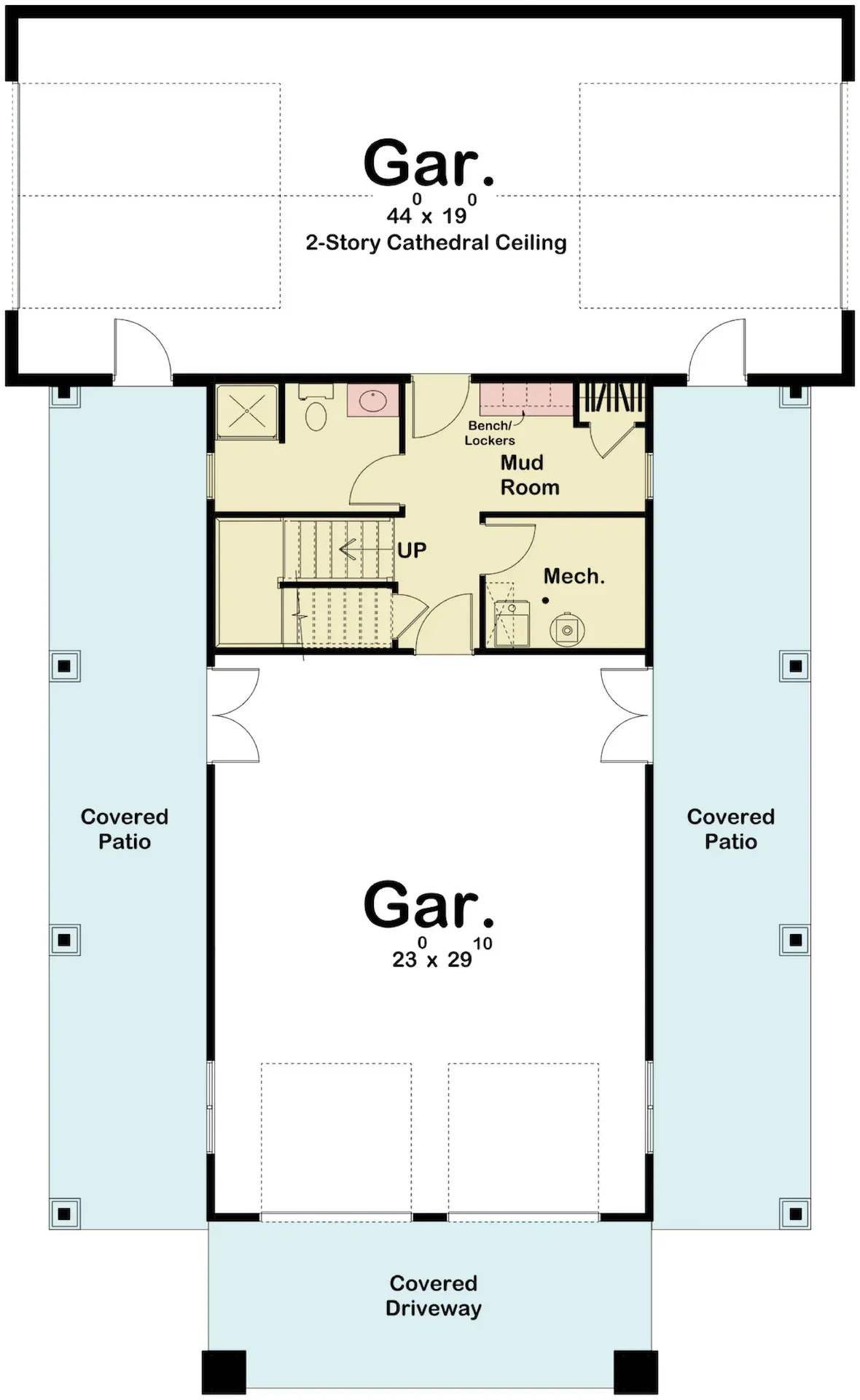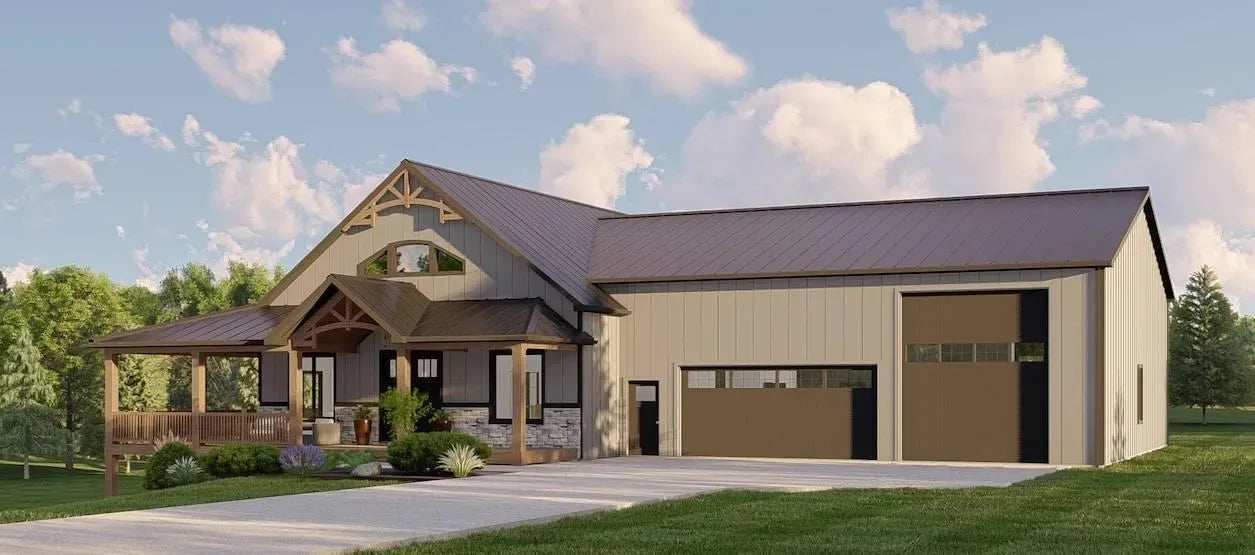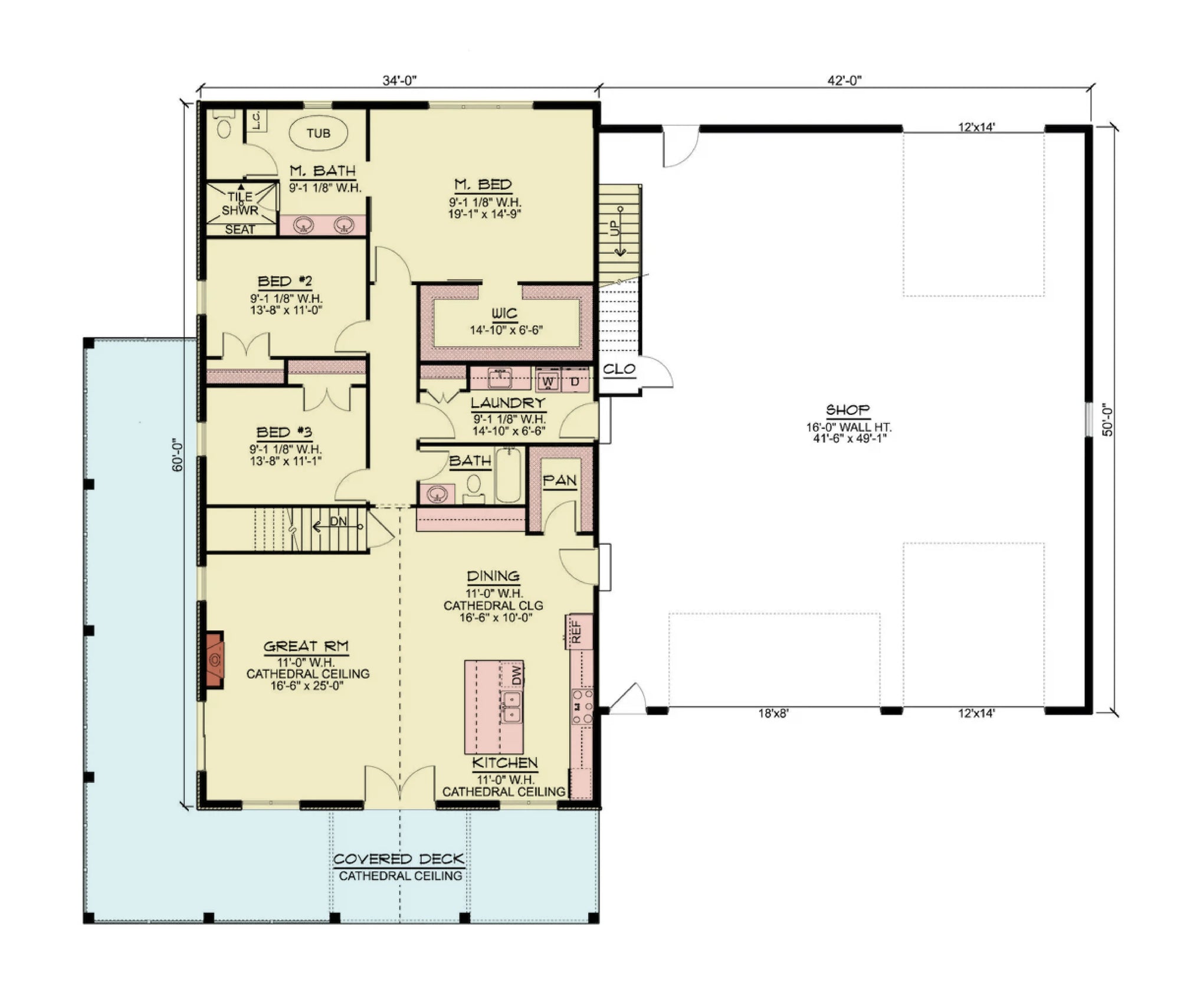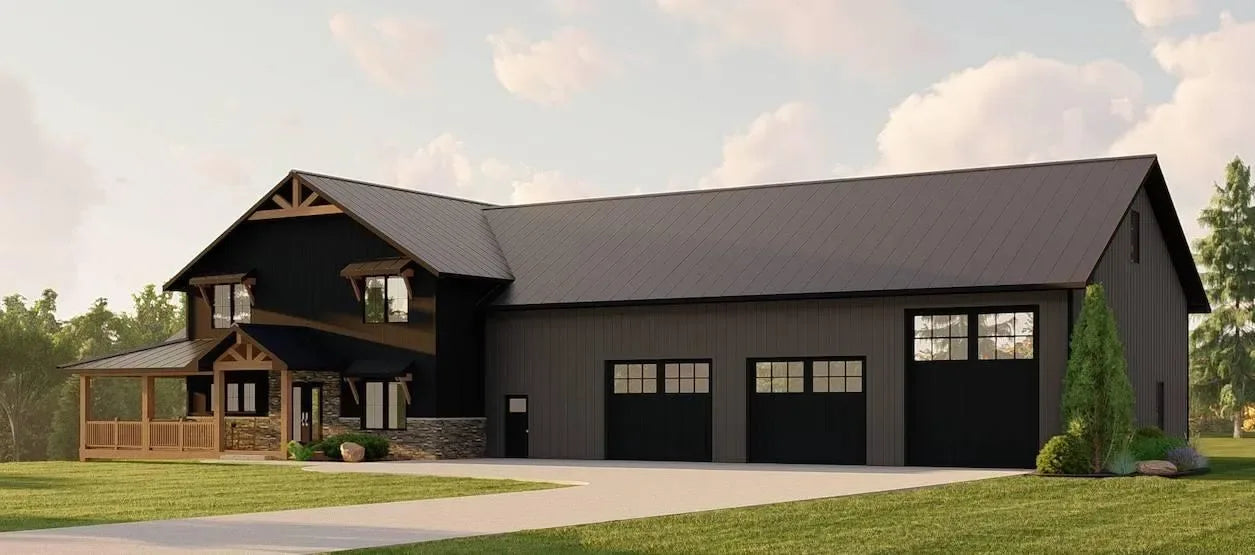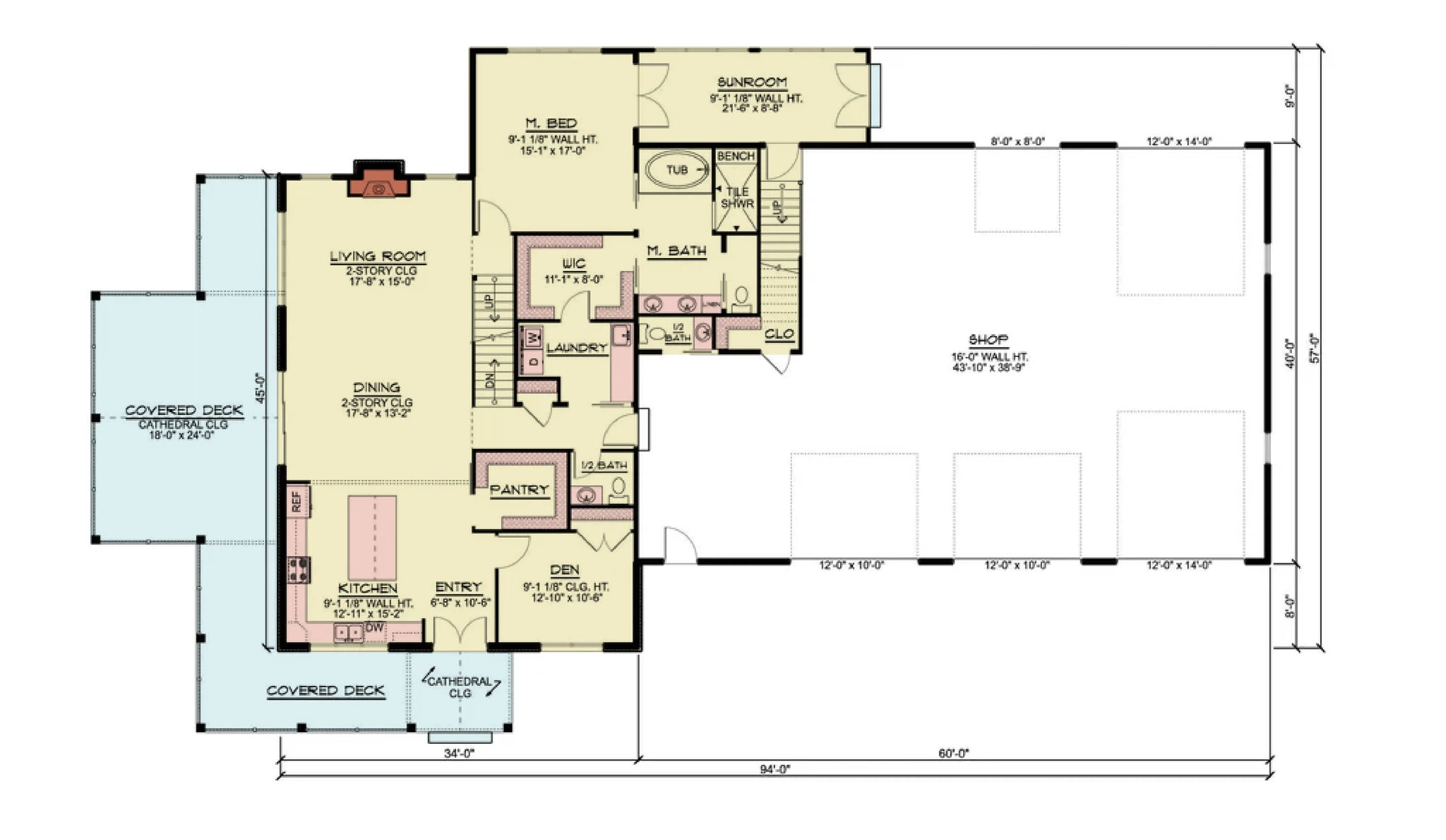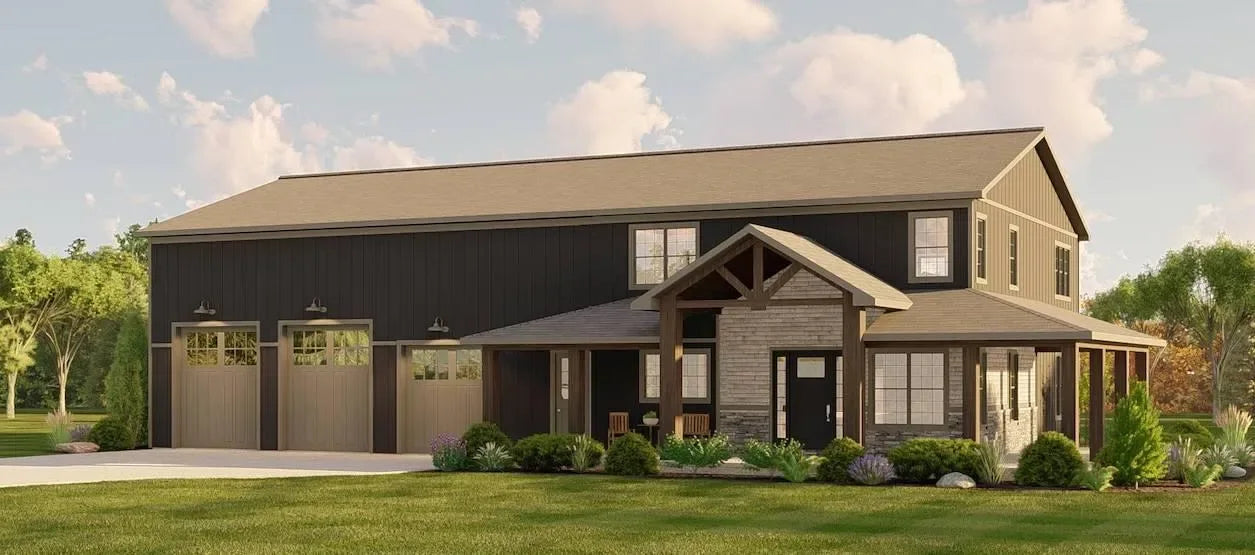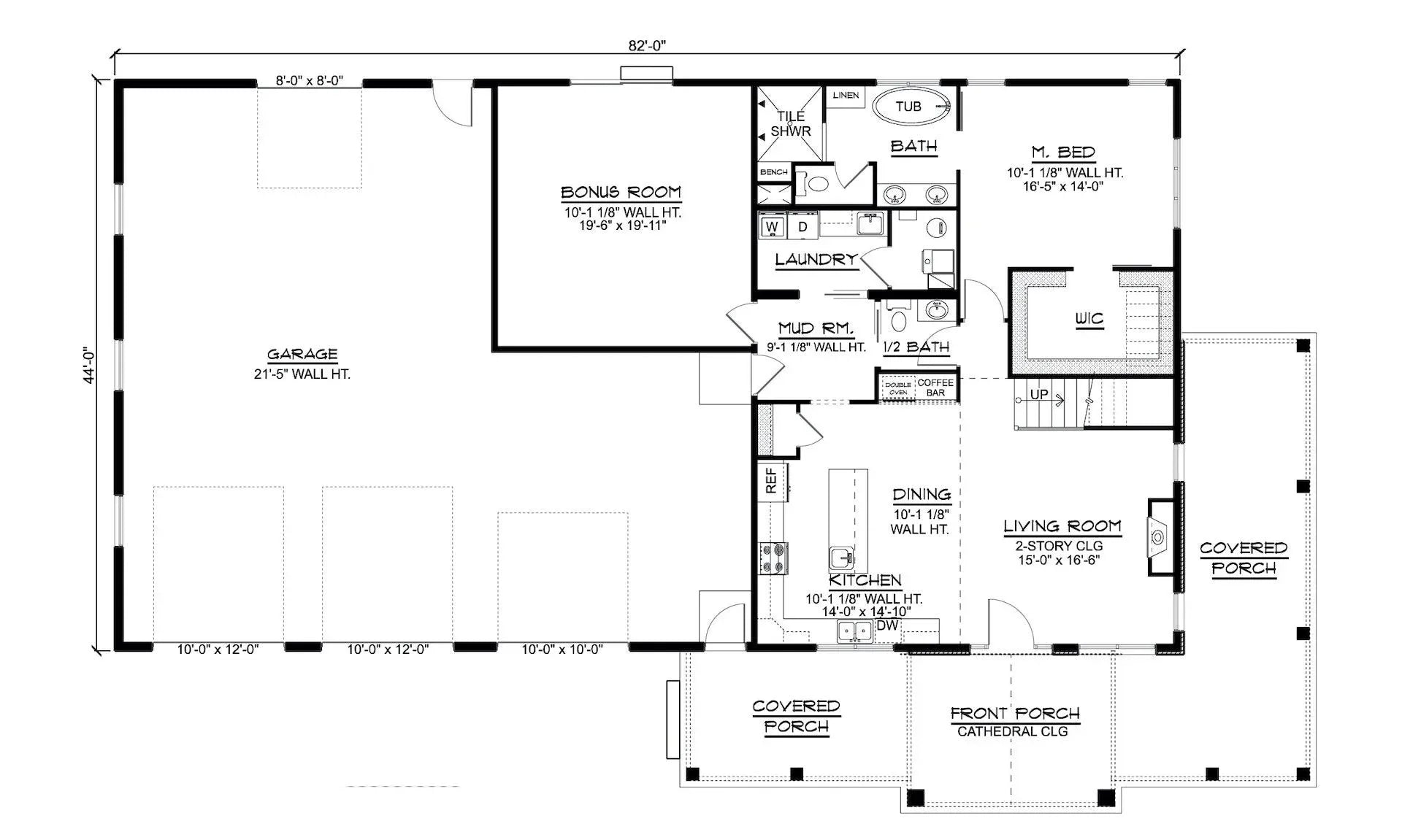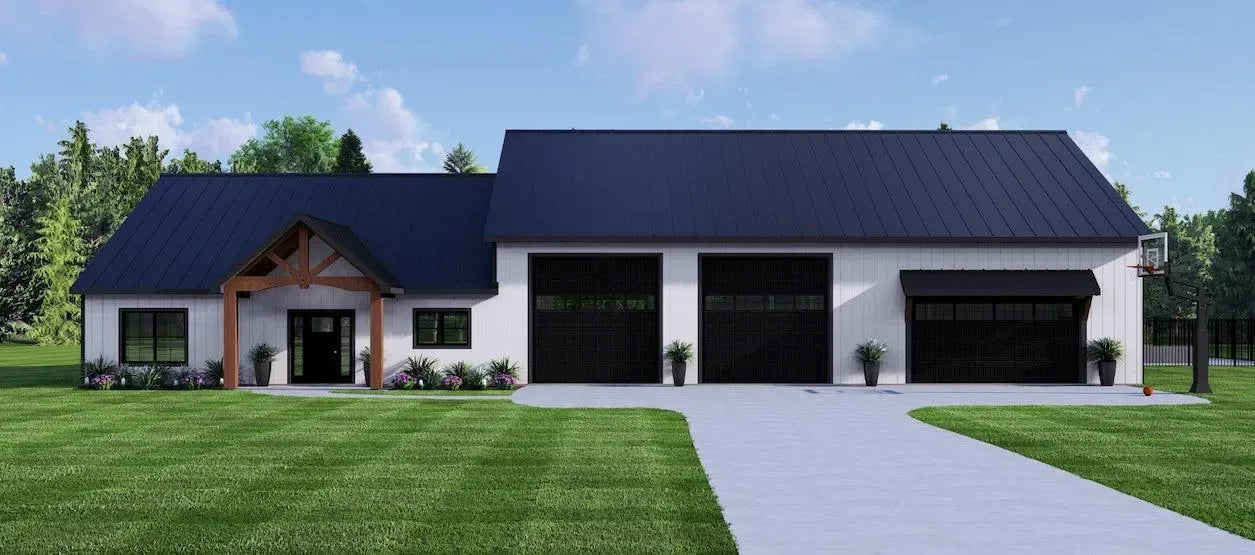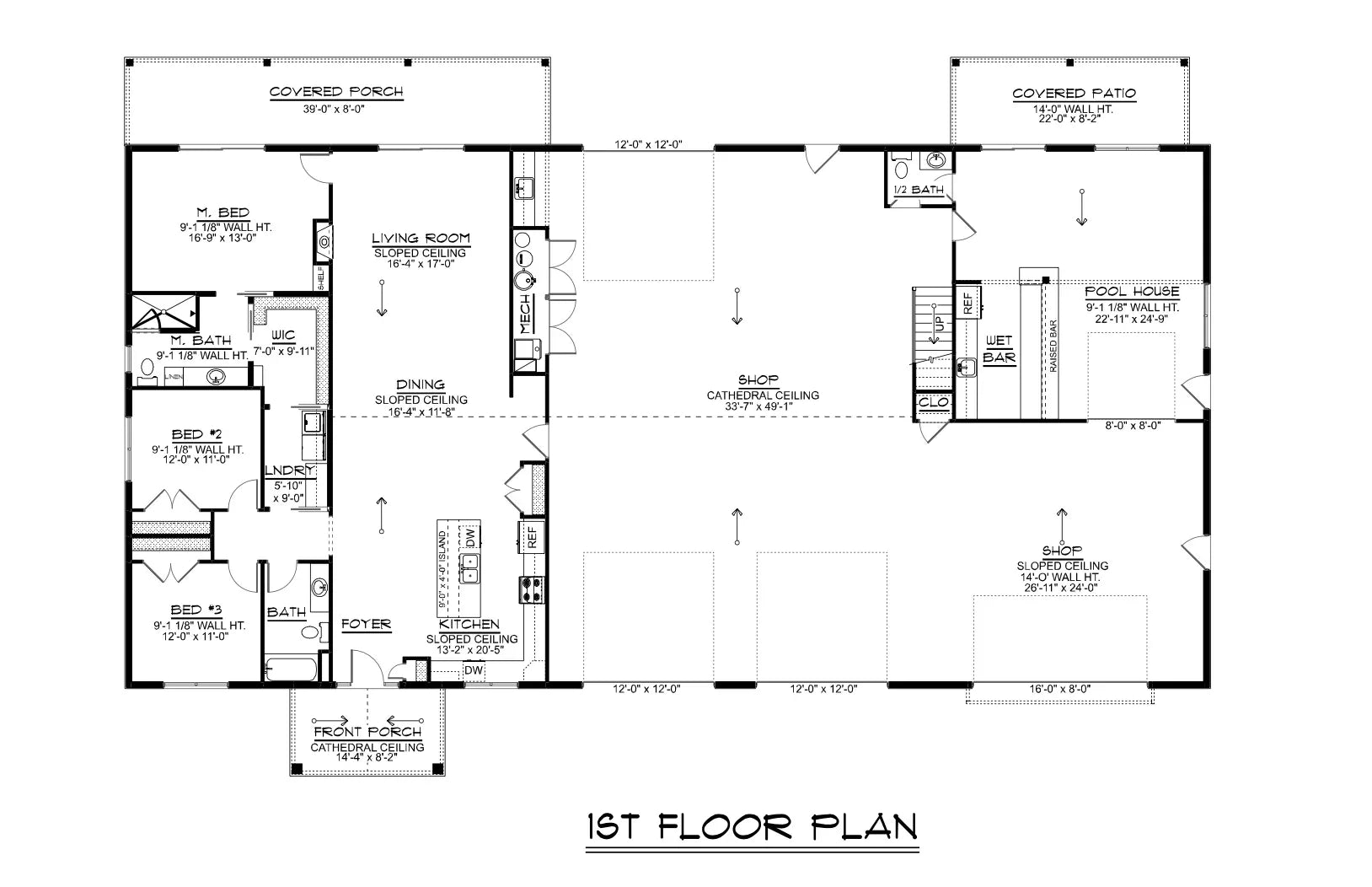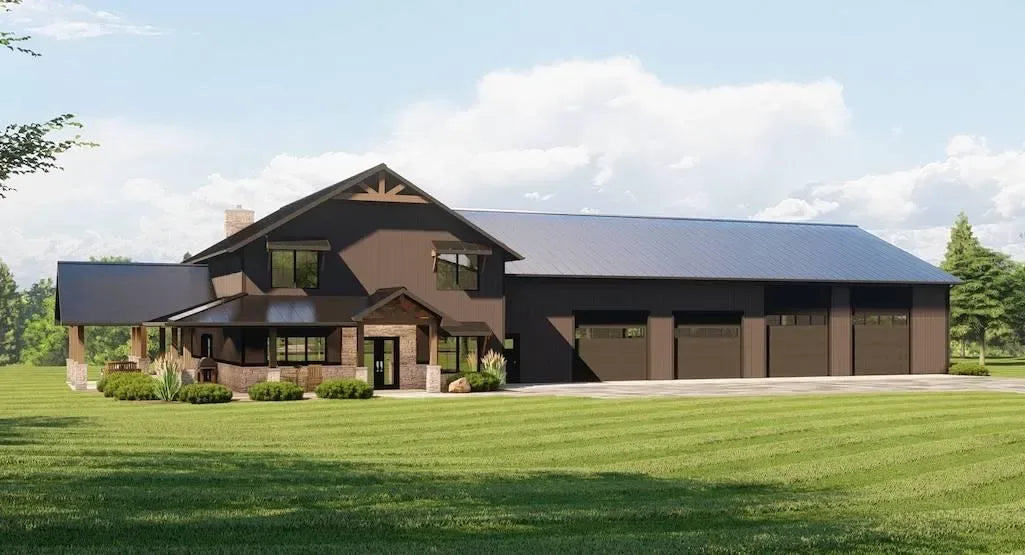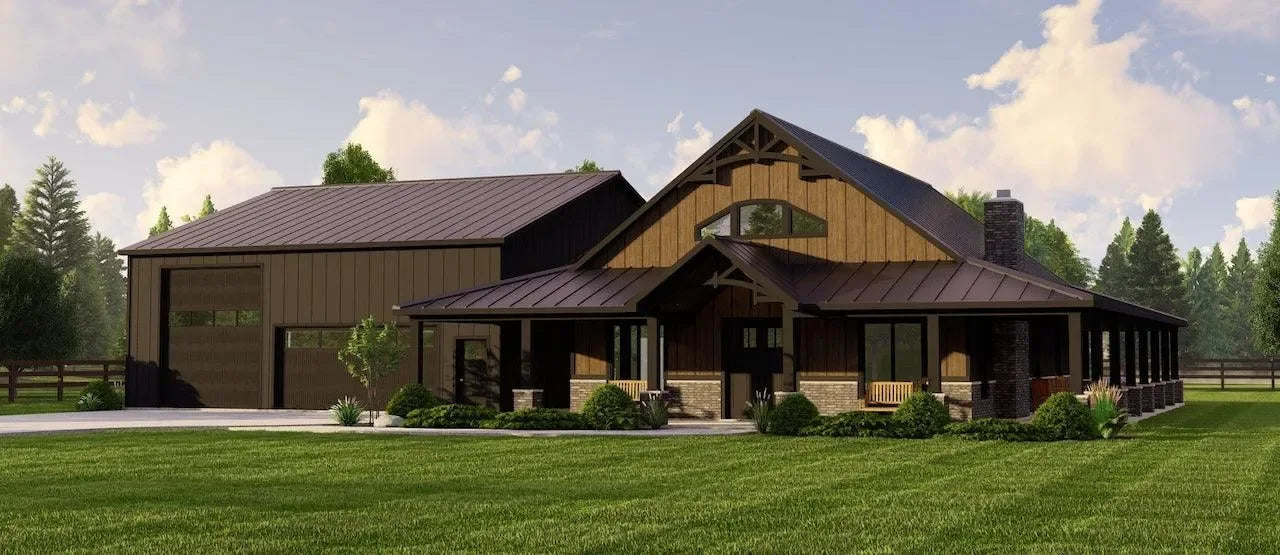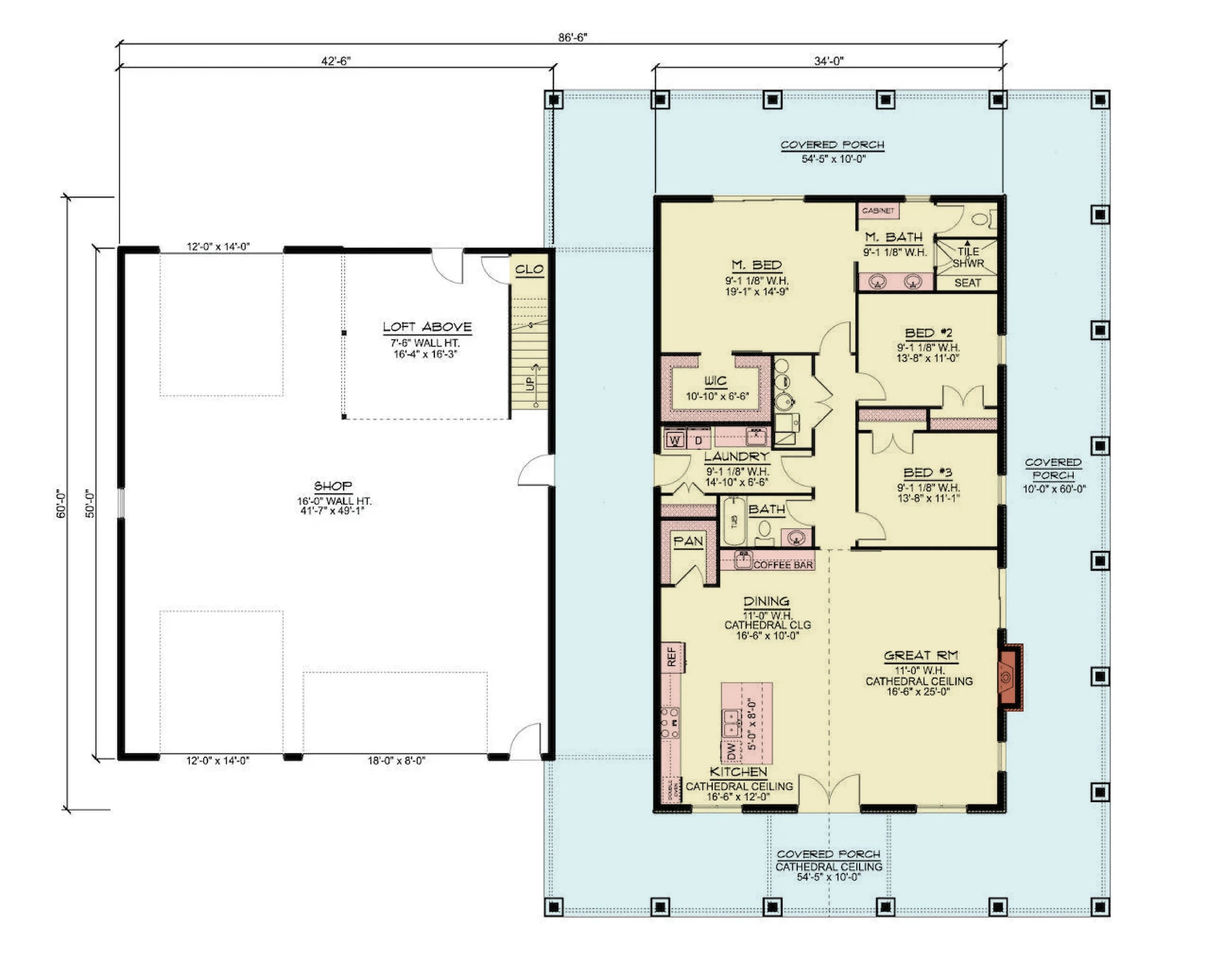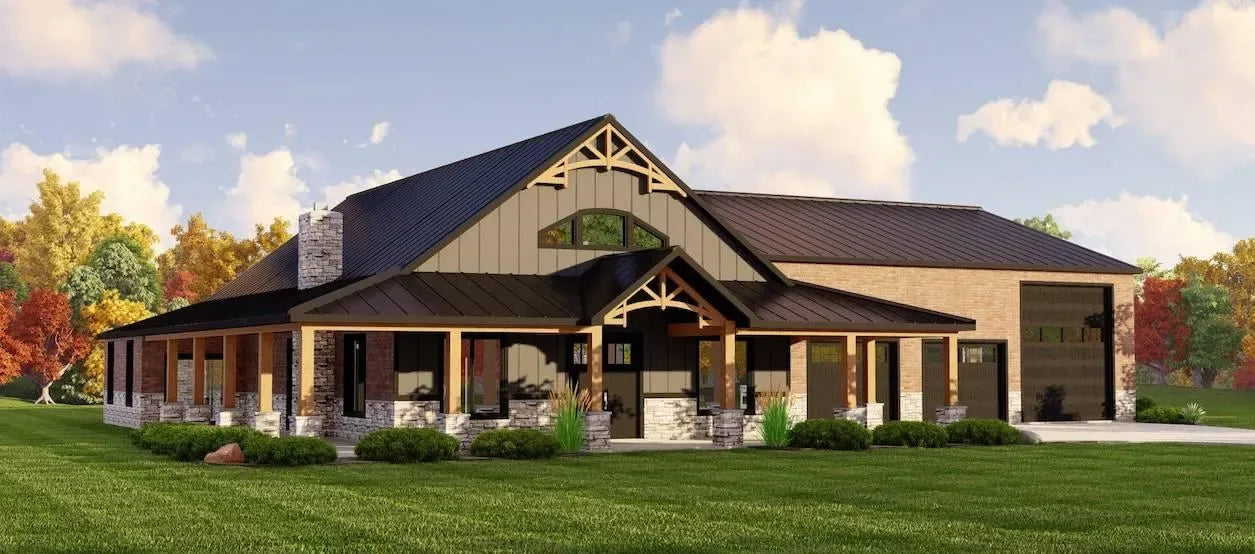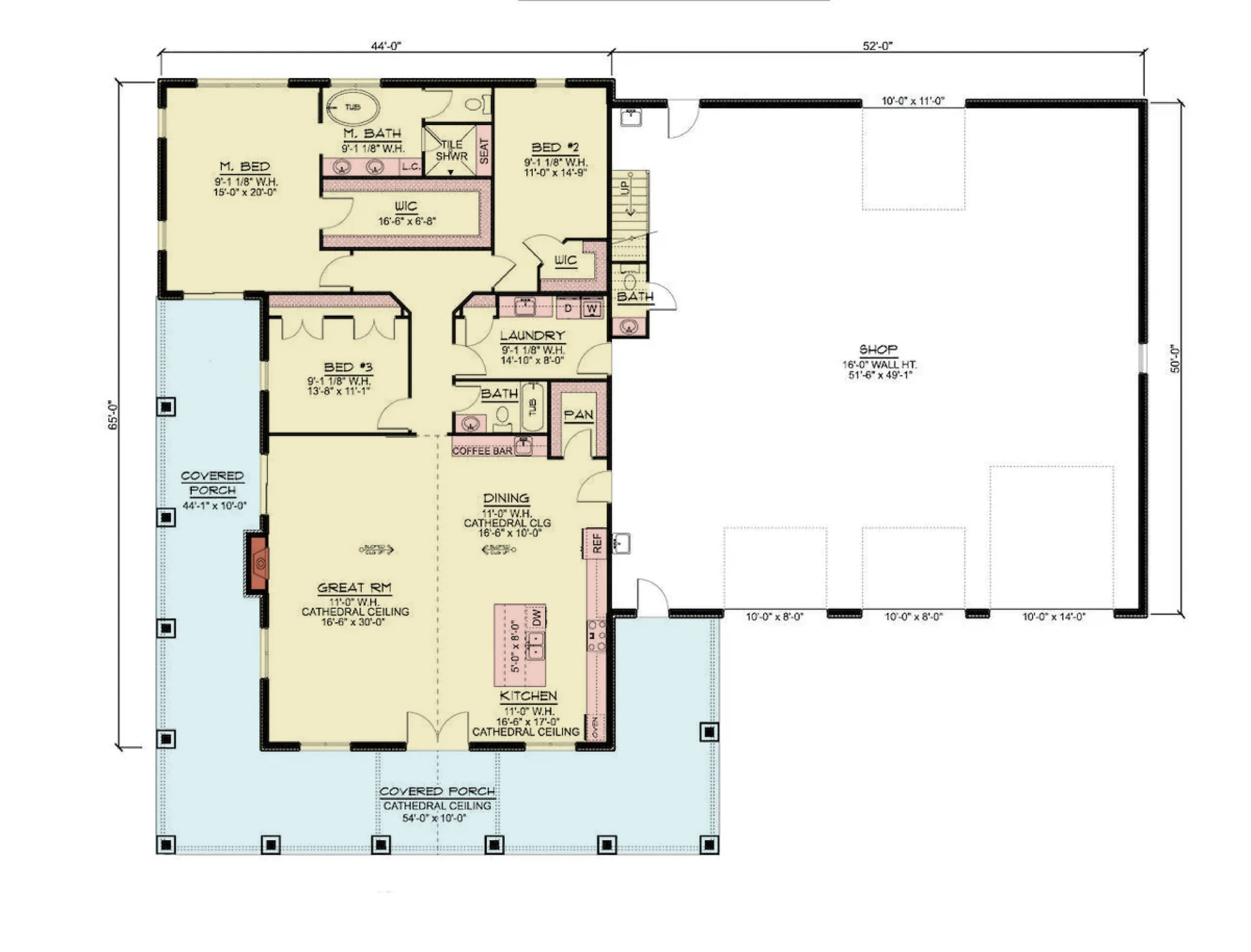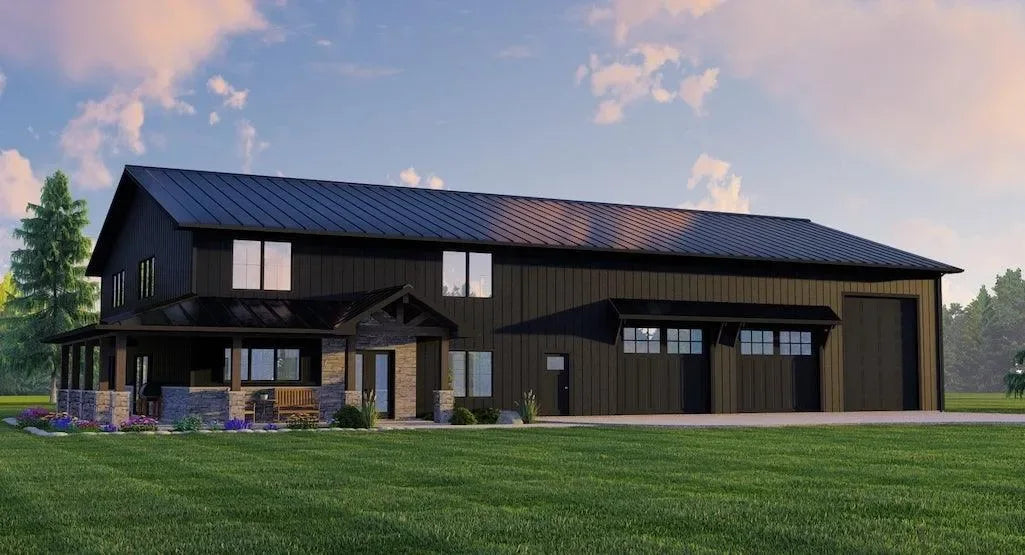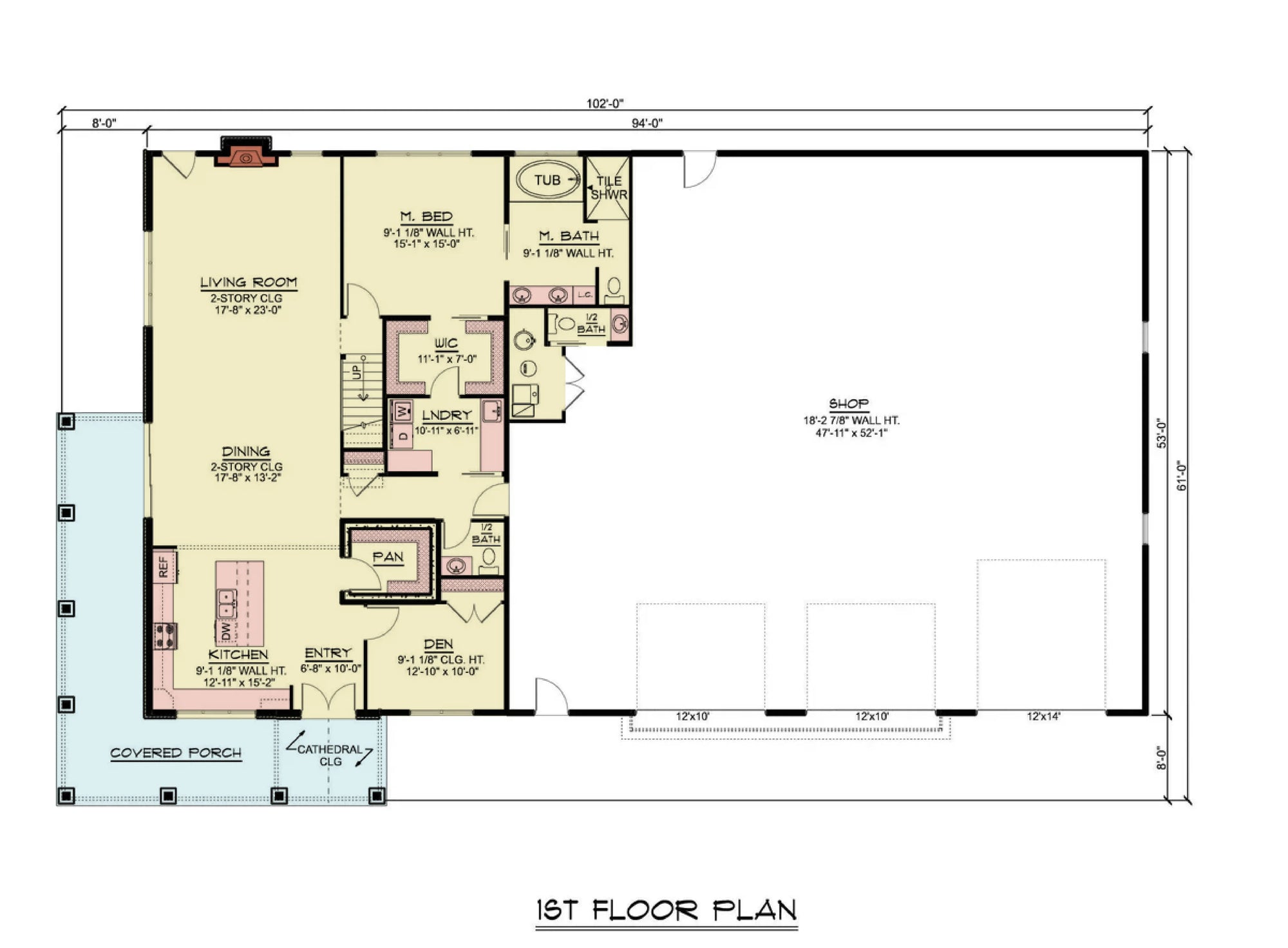
Finding a barndominium plans that includes a massive RV garage means balancing ample space for your recreational vehicles with comfortable living quarters under one roof. Whether you need storage for a 45-foot Class A motorhome or multiple travel trailers, the right house plans combine functionality, durability, and style to meet your exact needs.
Explore plans designed for every property size and lifestyle below.
Different RV owners have different storage requirements. A full-time traveler needs maintenance bays and utility hookups, while weekend adventurers prioritize gear storage and family-friendly layouts. Multi-vehicle collectors require oversized garages with separate bays for boats, motorhomes, and ATVs.
Store large Class A motorhomes and fifth wheels with ease in plans featuring 40-50 foot deep bays, 14-16 foot ceiling clearances, and 12+ foot interior widths. Include maintenance bays with 50-amp electrical hookups, water connections, and grey/black water dump stations for year-round RV preparation. Open-concept living space suits minimalist lifestyles, while clear-span framing eliminates interior posts that obstruct vehicle movement. Additionally, covered RV ports protect slide-outs and rooftop components from UV damage and weather.
Mid-size garages accommodating travel trailers and Class C motorhomes typically range from 30-40 feet deep with 12-14 foot ceilings. Dedicated gear storage areas keep camping supplies, outdoor equipment, and seasonal items organized near the garage for easy loading. Family-friendly layouts include multiple bedrooms, shared bathrooms, and entertainment spaces—sometimes featuring a loft above the garage as guest quarters or a media room. Pull-through or ramp-free designs make RV loading before trips simple and safe.
Oversized garages fitting multiple RVs, boats, and recreational vehicles offer separate bays for different vehicle types and sizes. A 40x60 foot barndominium garage might include two RV-sized bays plus storage above, while larger plans accommodate everything from ATVs to large motorcoaches. Workshop areas with reinforced slabs, taller ceilings, and high-bay doors provide workspace for vehicle maintenance. Multiple electrical hookups and infrastructure connections suit owners with a growing fleet.
Matching your plan dimensions to your property size and local zoning requirements ensures proper setbacks, turning radius for large vehicles, and room for future expansion. Consider these recommendations based on acreage.
Plans ranging from 40x60 to 50x80 feet maximize garage space while maintaining comfortable living areas. Ceiling heights of 14-16 feet accommodate most Class A motorhomes and tall fifth wheels. Vertical storage solutions like lofts and mezzanines with foldable staircases make efficient use of available space. Single-story designs reduce overall footprint, and smart positioning—facing the RV garage door away from the street—minimizes driveway length while allowing adequate turning radius.
Larger plans from 60x100 to 80x120 feet offer expanded garage and living areas with room for multiple garage doors. Drive-through configurations with front and rear doors facilitate efficient maneuvering of large rigs without backing. Separate workshop bays with higher clearance accommodate lifts and maintenance equipment. This property range also provides space for ancillary outbuildings and future expansion.
Massive complexes of 100x150 feet or more—sometimes multiple connected buildings—dedicate bays solely to RV storage with individual utility connections including 50-amp power, dump stations, water, and wash bays. Separate living quarters and commercial-grade storage create opportunities for RV rental or storage business ventures. Firebreaks, adequate septic capacity, and proper road access become important considerations, though zoning is typically more flexible on larger acreage.
Construction quality is essential when creating storage for heavy recreational vehicles. Premium features ensure your barndominium protects your investment for decades.
Engineered steel frames using 14-gauge or heavier studs support heavy RV loads and wide clear spans without interior posts. Reinforced concrete floors—4-6 inches thick with rebar or wire mesh—handle Class A motorhome weights exceeding 20,000 lbs. Steel construction offers resistance to warping, insect damage, and rot, with 50+ year structural life on frame components. Seismic and wind resistance meets commercial building standards in demanding climates.
Ceiling heights of 16-20 feet accommodate the tallest RVs, buses, and satellite domes while providing buffer room above rooftop AC units and antennas. Oversized garage doors—up to 16 feet wide and 14 feet tall—offer striking entrance options making entry and exit effortless. Clear-span construction using steel trusses or long-span engineered wood eliminates interior support posts. Proper ventilation systems including roof vents and ridge vents manage vehicle exhaust and prevent moisture buildup.
Metal roofing with 25-30 year warranties, standing seam construction, and snow guards in cold climates protect your home and stored vehicles. Insulated wall systems using spray foam or rigid foam with vapor barriers maintain stable interior temperatures and prevent condensation on metal shells. Drainage systems with gutters, downspouts, and proper site slope prevent water damage and flooding. UV-resistant exterior finishes extend the life of both building and stored recreational vehicles.
Personalization options make each plan unique to your lifestyle and suit your specific needs. From functional modifications to luxury upgrades, customization transforms a standard plan into your ideal barndominium.
Add wash bays with floor drains, sloped surfaces, and chemical-resistant coatings for RV maintenance. Include heated floors through radiant slab systems and zoned climate control for year-round use. Design pull-through configurations that eliminate difficult backing maneuvers. Create separate entrances for living and garage areas with proper fire separation, wall ratings, and electrical isolation meeting building code requirements.
Install hydraulic RV lifts for space-efficient double-stacking in very tall bays—requiring 20+ foot ceilings and reinforced slabs. Add observation decks and mezzanines with railings and stairs overlooking the garage area. Include guest suites above garage bays with full bathrooms and sound insulation. Design gourmet kitchens opening to covered RV loading areas through sliding or folding walls, creating seamless indoor-outdoor living and entertaining elements.
The right barndominium plan combines massive RV garage space with comfortable living quarters, premium construction, and customization options that match your exact lifestyle. Whether you need storage for a single motorhome or multiple recreational vehicles, plans range from compact 40x60 foot designs to expansive 100x150 foot complexes.
Shell-only steel builds typically cost $20-31 per square foot, while fully finished barndominiums with interior finishes, HVAC, and plumbing range from $65-160 per square foot depending on location and quality level.
Browse available house plans, explore customization services, and start building the barndominium that meets your needs. Your perfect RV garage home is ready to become reality.
32 house plans
Free
Direct