


























Choosing the architectural blueprint for your dream home is a foundational decision that influences your budget, your property's footprint, and how your family interacts daily. The debate between ranch-style house plans and two-story house plans is about much more than just stairs; it is a choice between horizontal sprawl and vertical efficiency.
As we navigate the residential trends of 2026—where multi-generational living, dedicated home offices, and long-term "aging-in-place" accessibility are top priorities—understanding the structural and financial trade-offs of each layout is crucial. Whether you are building on a sprawling rural acreage or a premium, narrow suburban lot, this comprehensive guide breaks down the real-world pros, cons, and hidden costs to help you make an informed decision.
Head-to-Head Snapshot: Ranch vs. Two-Story
-
Choose a Ranch Plan if: You prioritize maximum accessibility (zero stairs), lower long-term exterior maintenance, uniform climate control, and have a wider lot that accommodates a larger structural footprint.
- Choose a Two-Story Plan if: You want to maximize your square footage on a smaller or narrow lot, prefer clear privacy zoning (bedrooms upstairs, living downstairs), and want to save 10–20% on foundational and roofing construction costs.
Key Takeaways
-
Land and budget drive the decision: Ranch homes require larger lots and cost more per square foot to build, while two-story homes maximize space on smaller lots with typically 10-20% lower construction costs for the same square footage.
-
Accessibility favors ranch plans: Single level living eliminates stairs, making ranch homes ideal for aging homeowners, families with small children, and anyone with mobility challenges.
-
Two-story plans offer privacy zoning: Placing bedrooms upstairs separates sleeping areas from living areas, reducing noise transfer and creating distinct zones for daily living.
-
Both styles can work: Archival Designs offers ranch and two-story stock house plans with modification services to adapt either style to your lot conditions and local building codes.
-
Think long term: Your choice should account for future plans—whether that means aging in place, accommodating larger families, or maximizing resale value in your market.
Introduction: How to Choose Between a Ranch and Two-Story Home
The decision between a ranch style home and a two story home shapes everything that follows in your home-building journey. Your floor plan, construction budget, maintenance routine, and even your home’s resale potential all flow from this single choice.
In simple terms, a ranch home places all living space on one floor (though many include basements or bonus rooms), while a two-story home distributes rooms across two full levels. In 2026, lifestyle factors like multigenerational living, remote work requirements, and planning for a forever home make this decision more nuanced than ever.
Archival Designs provides pre-drawn ranch and two-story house plans ranging from 1,500 to 4,000+ square feet across architectural styles including Farmhouse, Modern, and Cottage. This guide breaks down the pros and cons of each style, compares costs and maintenance, and helps you match a plan to your lot and lifestyle.
Ranch-Style House Plans: What They Are and Why People Love Them
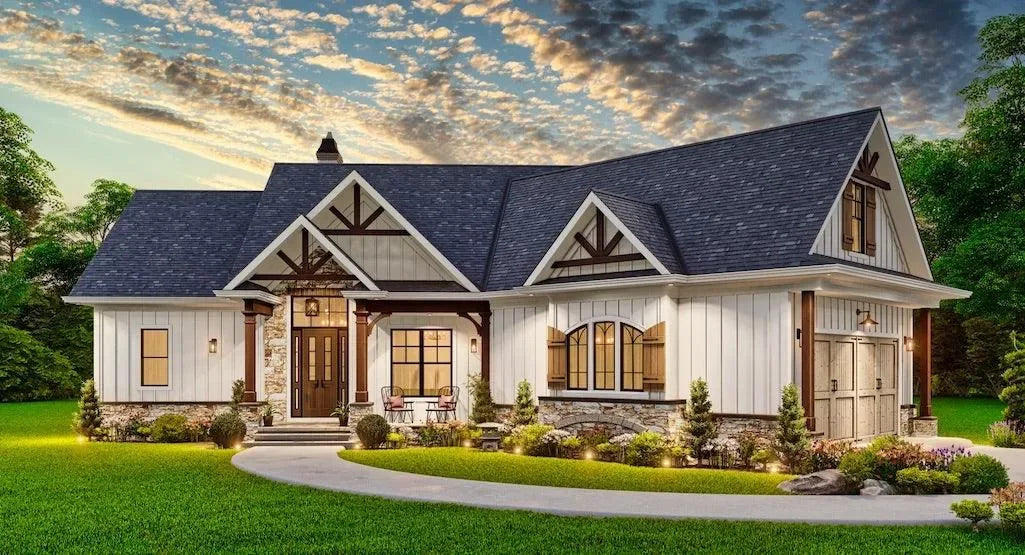
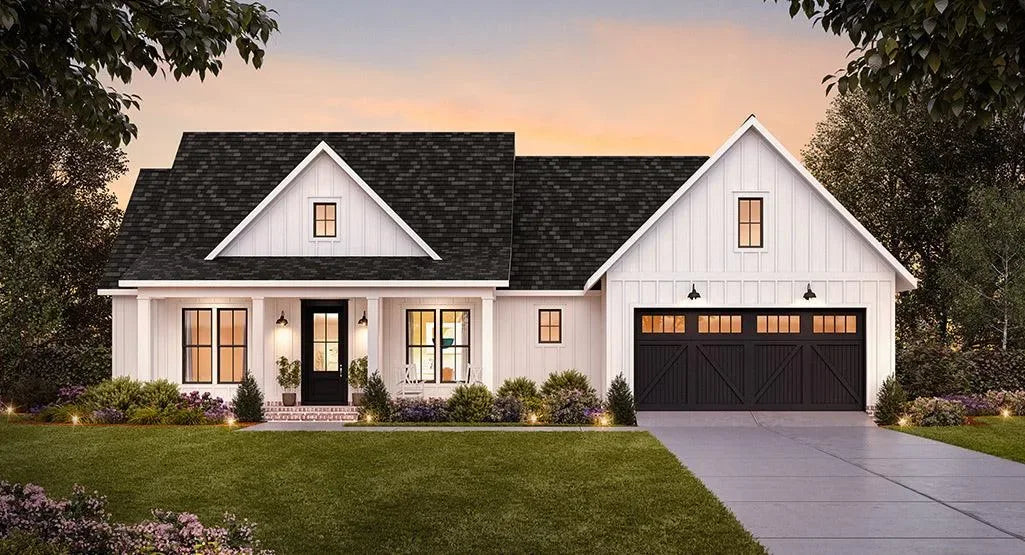
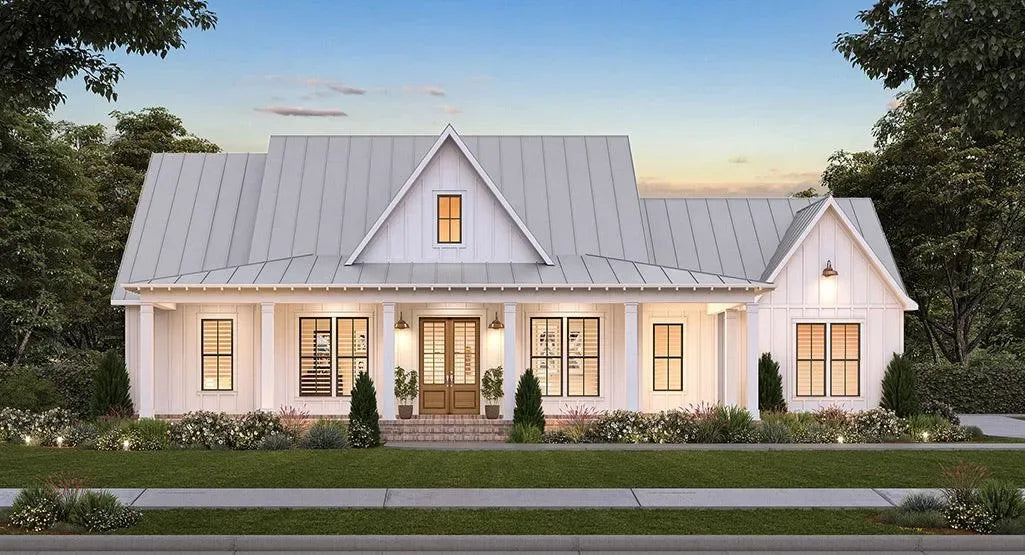
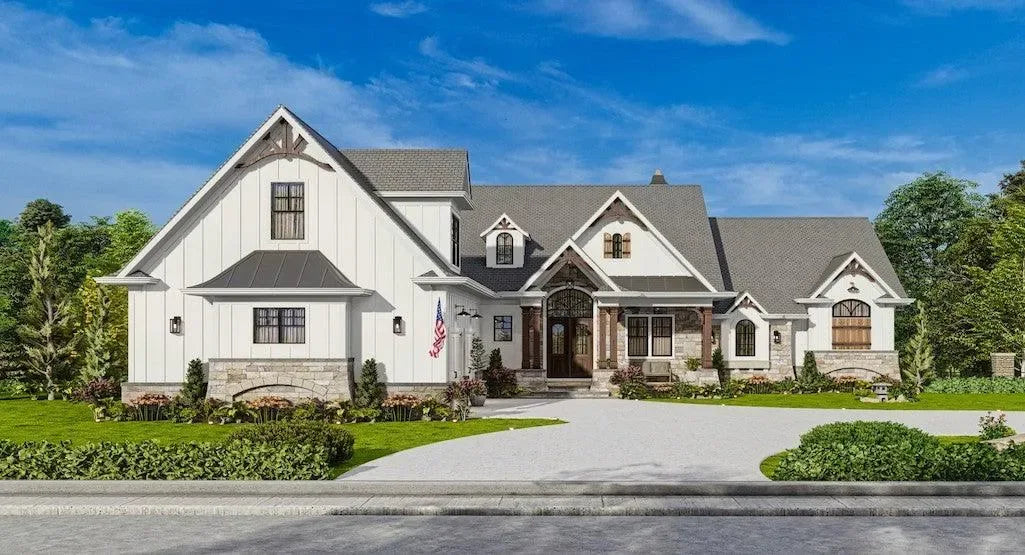
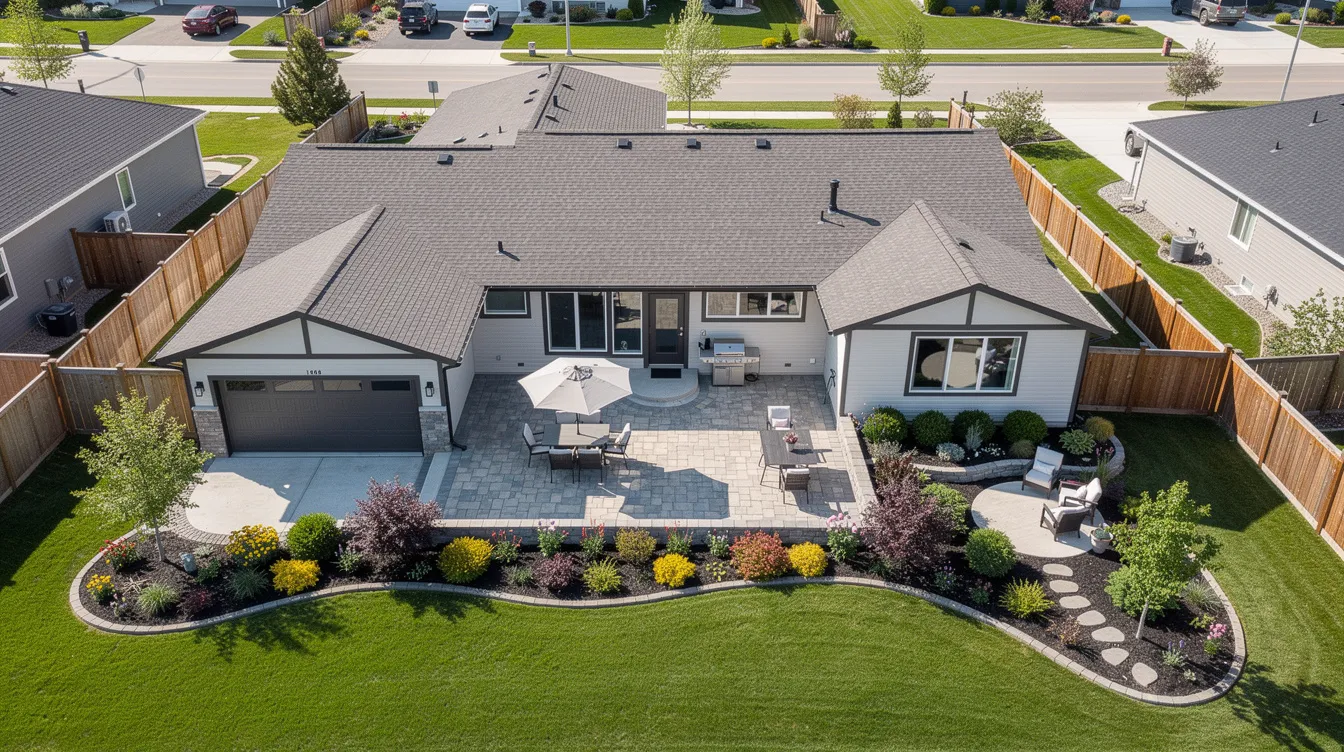
Ranch style homes spread horizontally across a larger footprint, typically featuring open floor plans with generous connections between indoor and outdoor spaces through porches, patios, and sliding glass doors.
Consider a classic ranch at approximately 2,100 square feet with 3 bedrooms and 2.5 baths, or a compact 1,600 square foot design suited to 60-foot-wide lots. Many ranch plans include options for a full basement or bonus rooms over the garage to add extra space without adding a second floor—a common modification request at Archival Designs.
Ranch homes remain especially popular among buyers planning to age in place, families with young kids, and households caring for elderly relatives because they eliminate daily stair navigation.
Pros of Ranch House Plans
Ranch homes are often chosen for convenience and safety, even when they cost slightly more per square foot than story homes with similar finishes.
-
Single-Level Living & Accessibility: No-stair navigation makes ranch homes wheelchair-friendly and easier for family members with joint issues, mobility issues, or temporary injuries. Our design team can widen hallways or doorways on existing ranch plans to meet accessibility goals.
-
Easier Everyday Maintenance: Cleaning windows, servicing gutters, and roof repairs are simpler when everything is closer to ground level. This reduces the need for specialized contractors with tall equipment.
-
Open, Family-Friendly Layouts: Ranch plans commonly feature spacious kitchens flowing into dining and great rooms, making it easy to supervise small children and host gatherings on the same floor.
-
Even Heating and Cooling: Having all conditioned space on one level tends to make temperature distribution more uniform, often allowing smaller HVAC system capacity and fewer hot/cold spots.
-
Stronger Appeal for Certain Buyers: In markets with aging populations—especially those in the Southeast and Sunbelt—ranch homes can command a modest price premium and sell faster to retirees and young families.
-
Seamless Indoor-Outdoor Integration: Because ranch-style house plans spread horizontally and sit flush with the natural grade of your property, they offer unparalleled potential for indoor-outdoor flow. Architectural features like sprawling courtyards, wrap-around porches, covered patios, and massive sliding glass walls can be seamlessly integrated directly from the main living spaces or the primary suite. This effortless transition to the backyard makes single-story living the premier choice for those who prioritize alfresco dining, outdoor entertaining, and a lifestyle connected to nature.
Cons of Ranch House Plans
The main trade-offs of ranch plans involve land use and construction costs, which matter most on smaller or in-town lots.
-
Larger Footprint Requires Larger Lot: To achieve 2,400 square feet of living space, ranch style homes require wider or deeper lots. Zoning setbacks and lot coverage rules can limit ranch feasibility in dense neighborhoods.
-
Higher Foundation and Roofing Costs: More perimeter foundation and a larger foundation surface area typically make ranches cost more per square foot to build—even when interior finishes match.
-
Less Natural Separation Between Spaces: With all the bedrooms and living areas on a single level layout, sound and foot traffic can be harder to isolate. Split-bedroom layouts or deeper hallway buffers can help.
-
More Exterior Wall to Maintain: Sprawling layouts mean longer interior walking distances and more exterior wall area to insulate, potentially raising energy use over time.
-
Limited Expansion Above: Adding a true second floor to a ranch later is complex and expensive compared to finishing a preplanned second story.
Two-Story House Plans: Key Characteristics
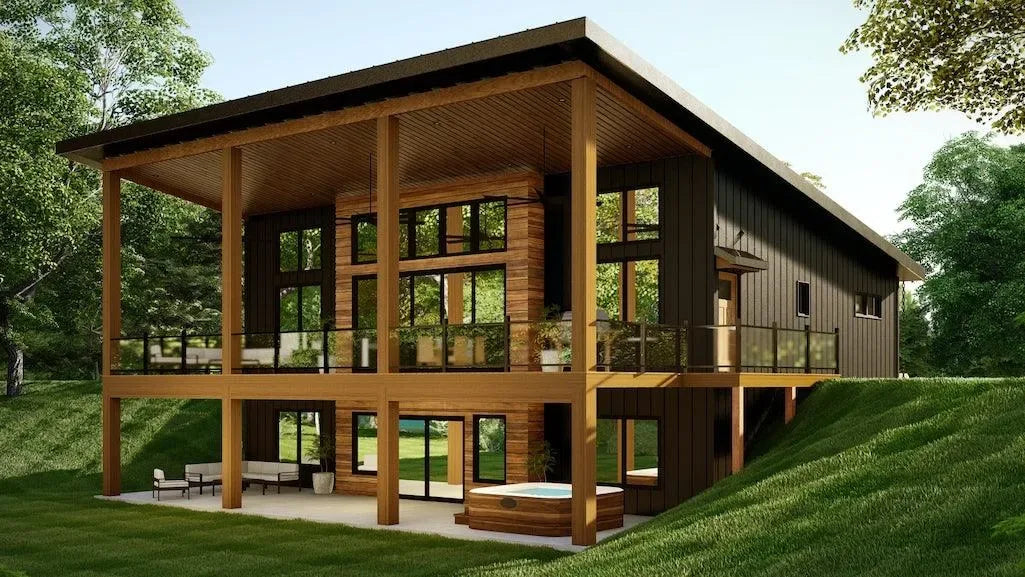
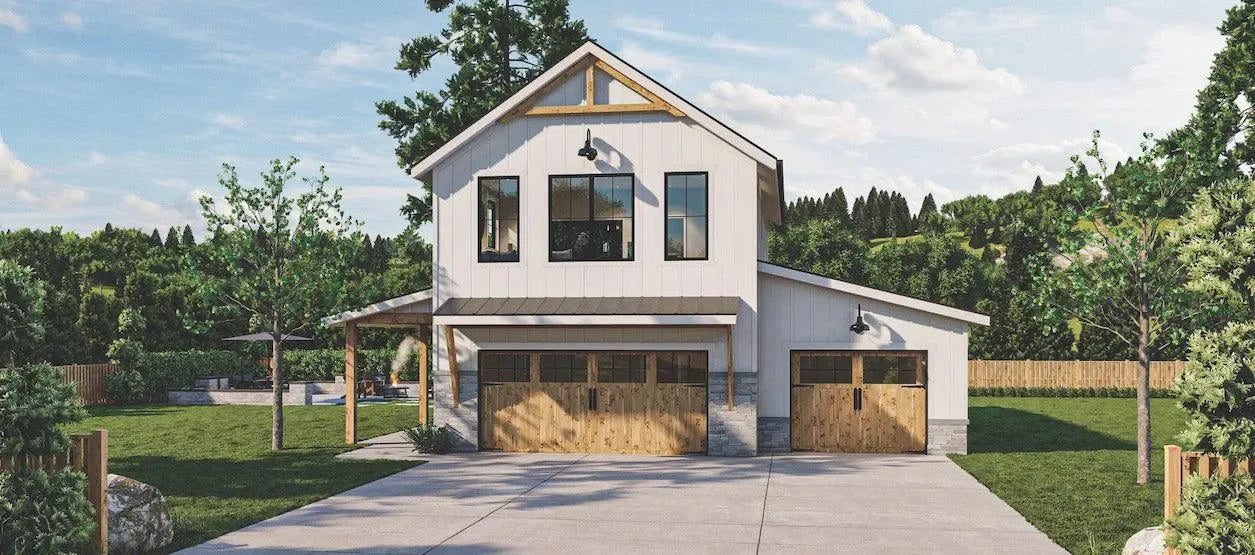
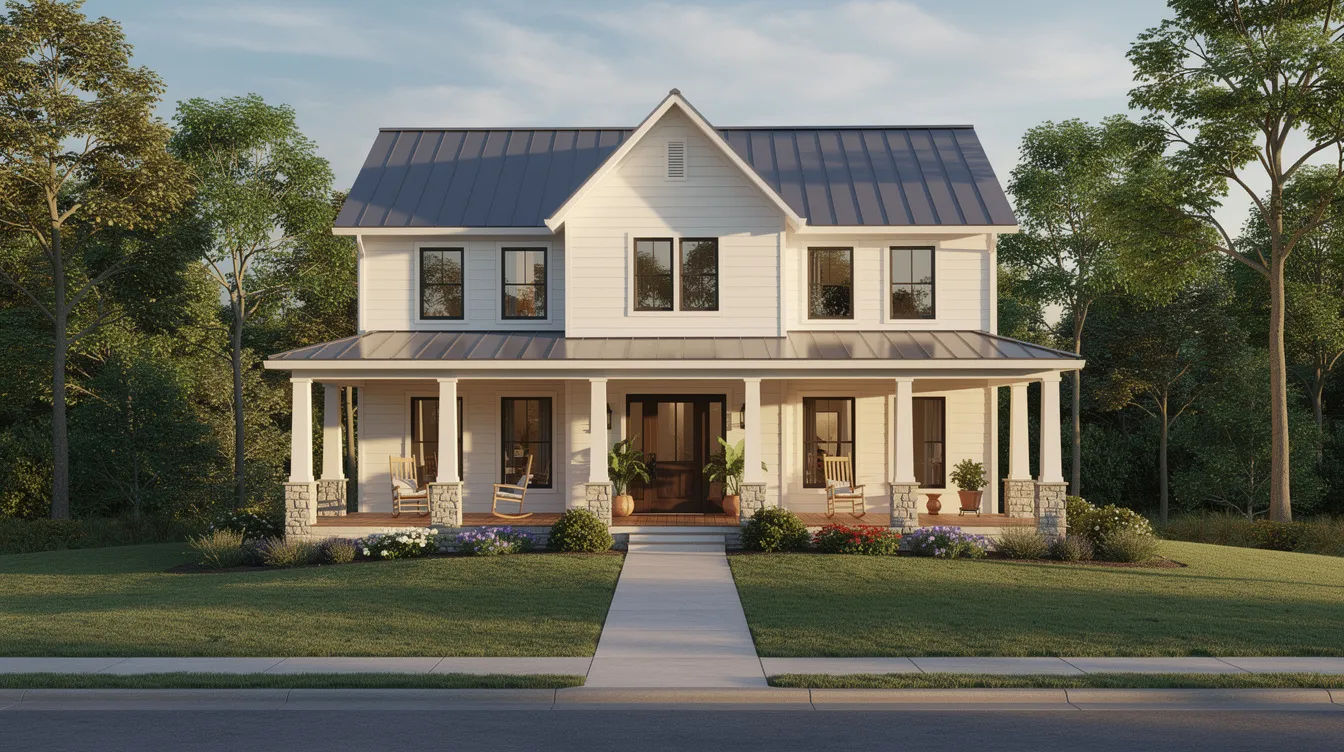
Two-story homes stack living space across two full levels, typically placing shared living areas on the ground floor and bedrooms upstairs. This vertical organization creates natural zoning between public and private zones.
Two-story plans excel on narrow or high-cost lots, allowing a 2,500+ square foot home to fit on land that might only accommodate a 1,600–1,800 square foot ranch. Consider a 2,800 square foot Modern Farmhouse with an open first floor living area and 4 bedrooms on the second floor—this maximizes space while preserving yard area.
These designs often create dramatic interior features like two-story foyers and staircases as focal points, plus varied exterior elevations that many buyers associate with traditional curb appeal.
Pros of Two-Story House Plans
Two-story homes balance efficient land use, cost effective construction, and strong curb appeal—which is why they remain popular with growing families and professional builders.
-
More House on Less Land: Stacking more living space reduces the footprint, leaving more outdoor space for play areas, pools, or gardens while often lowering land costs.
-
Built-In Privacy Zoning: Placing bedrooms upstairs separates quiet sleeping areas from noisy kitchens and home offices on the main floor, giving family members more privacy.
-
Striking Curb Appeal and Views: Taller façades and upper floors can capture better views—second floor bedroom windows facing a lake or mountains enhance both lifestyle and long term value.
-
Flexible Room Placement: Options like main-floor guest suites, upstairs lofts, and dedicated home offices away from daily traffic are common. Archival Designs frequently customizes room locations within two-story plans.
-
Elevated Security and Peace of Mind: A lesser-known but highly valued practical benefit of two-story house plans is structural security. Having the primary bedrooms situated safely on the upper level allows homeowners to leave bedroom windows open for natural ventilation during warm nights with a significantly lower risk of forced entry or burglary. Especially for urban or dense suburban lots, this vertical elevation provides an intrinsic layer of personal privacy and peace of mind that ground-floor bedroom windows simply cannot duplicate.
Cons of Two-Story House Plans
The main drawbacks involve stairs, potential comfort differences between upper floors, and more complex maintenance.
-
Stair Safety and Accessibility: Daily stair use challenges toddlers, aging homeowners, and those with mobility challenges. Buyers planning to age in place should consider at least one full bedroom suite and laundry on the main floor.
-
Noise Transfer from Upper Level: People walking overhead can transmit sound to rooms below. Upgraded floor assemblies with sound-dampening materials help significantly.
-
More Involved Exterior Maintenance: Window cleaning, painting, and gutter access require professionals with proper equipment, slightly increasing regular maintenance budgets.
-
Evacuation Considerations: Upper-story bedrooms rely on stairways or rescue ladders. Bedroom windows must meet egress code requirements—something our blueprint packages clearly document.
-
Temperature Differences Between Floors: Heat rises, making upper floors warmer in summer. Proper HVAC zoning and insulation are essential—our plans can pair with modern energy saving features to mitigate this.
Energy Efficiency and Climate Control: HVAC Zoning
One hidden cost of two-story homes is the complexity of HVAC (Heating, Ventilation, and Air Conditioning) management. Because heat rises, maintaining a consistent temperature across two levels often requires dual-zone HVAC systems or more robust insulation strategies to prevent the "upstairs oven/downstairs freezer" effect. In contrast, ranch homes benefit from a more uniform floor plate, allowing for simpler, more efficient single-zone climate control. When comparing the two, ensure your builder accounts for the extra equipment cost of zoning a two-story home, which can offset some of the structural savings found in the foundation.
Second-Story Emergency Egress and Fire Safety Considerations
An often-overlooked disadvantage of two-story house plans is emergency preparedness. In self-build communities and homebuilding forums, safety-conscious buyers frequently highlight that upper levels present unique evacuation challenges during emergencies. Fire safety in a two-story layout requires meticulous pre-planning, including the strategic placement of building-code-compliant egress windows and the integration of secondary escape routes, such as dedicated rescue ladders in upper-level bedrooms. While single-story ranch homes offer quick, ground-level window exits from any room, vertical homes demand strict adherence to local safety regulations to ensure every family member has a clear, unblocked path to safety.
High-Elevation Maintenance and Contractor Costs
While a two-story home saves you money upfront during the foundation phase, it can introduce premium long-term operating expenses due to high-elevation maintenance. Simple tasks like pressure-washing siding, repairing second-story window seals, clearing high gutters, or inspecting roof flashing become dangerous DIY projects. Homeowners often find themselves forced to hire professional contractors equipped with specialized tall ladders or heavy scaffolding. Over the lifespan of the home, these recurring high-elevation maintenance costs can gradually erode the initial structural savings of building up instead of out.
The Hybrid Option: 1.5-Story and Loft Designs
If you are caught between the accessibility of a ranch and the space efficiency of a two-story home, a 1.5-story or "bonus room" plan may be the perfect compromise. These designs place the primary living areas, kitchen, and owner’s suite on the main level—offering the "aging-in-place" benefits of a ranch—while tucking additional bedrooms, a home office, or a casual loft space into a finished attic or second level. This layout is increasingly popular in 2026, as it maximizes square footage without the full-scale vertical footprint of a traditional two-story home, effectively providing a "best of both worlds" solution for growing families.
Potential Cost Comparison: Ranch vs Two-Story in 2026
Actual construction costs vary by region and finishes, but consistent structural patterns emerge between ranch and two-story homes.
| Feature | Ranch | Two-Story |
| Foundation/Roof Cost | Higher (More footprint) | Lower (Vertical stacking) |
| Accessibility | Best (No stairs) | Moderate (Stair-dependent) |
| Maintenance | Easier (Ground level) | Complex (Requires ladders) |
| Heating/Cooling | Simple (Single-zone) | Complex (Often dual-zone) |
| Lot Efficiency | Requires more land | High (Small footprint) |
Land Acquisition: A 2,400+ square foot ranch needs a bigger, wider lot—substantially raising total project costs in urban markets compared to fitting a two-story on a narrower lot.
Energy Use Over Time: Ranch homes benefit from simpler, more even heating and cooling. Compact two-story designs often reduce heat loss in cold climates due to less exterior envelope. Invest in good insulation and energy efficient windows regardless of layout.
Navigating Lot Coverage Ratios and Zoning Constraints: Your property’s dimensions and local zoning bylaws often make the final decision for you. Building a 2,500-square-foot ranch home requires a substantial horizontal footprint, which can conflict with local lot-coverage limits and strict boundary setbacks. If your building lot is narrow or restricted, a sprawling single-story plan will quickly consume your entire yard. Stacking that same square footage into a two-story house plan compresses the building footprint, effortlessly clearing zoning hurdles while leaving ample outdoor real estate for future landscaping investments, swimming pools, or backyard recreation zones
Lifestyle & Lot Considerations: Which Layout Fits Your Life?
Beyond dollars, lifestyle patterns and your building site often determine which layout works best.
-
Family Makeup: Many families with young kids prefer ranch homes for stair-free supervision. Teenagers wanting more privacy often thrive with bedrooms upstairs in a two story.
-
Aging in Place: Minimize daily stair use if you plan to stay in your dream home into your 70s and beyond. Choose a ranch or a two-story with primary suite, kitchen, and laundry on the first floor.
-
Building Site: Wide, flat lots accommodate ranch designs well. Sloped lots or narrow urban parcels often favor two-story or walkout-basement plans.
-
Outdoor Living: Ranch homes naturally integrate with patios and courtyards. Two-story homes preserve more yard area by compressing the footprint—ideal for pools or extensive gardens.
-
Work-From-Home Needs: A second floor office provides more privacy from daily household activity. Ranch plans can position home offices at far ends of the layout or near separate entrances.
Privacy Dynamics: Connected Flow vs. Geographic Separation
When analyzing floor plans, consider how much "geographic separation" your family requires between bedrooms. Ranch-style homes naturally facilitate an interconnected, horizontal flow, which is exceptional for supervising young children but can compromise acoustic privacy since bedrooms often share walls with high-traffic social zones. Conversely, a two-story layout delivers absolute vertical zoning. By keeping the primary suite or secondary bedrooms on the upper level, you establish a physical and acoustic buffer from the noisy entertaining areas, modern home offices, or kitchens below—preventing the "lifestyle friction" that often occurs in single-level living.
Resale Value: How Your Layout Affects Future Marketability
Market trends fluctuate, but residential demand for specific layouts often follows regional lines.
-
The Ranch Advantage: In "Sunbelt" regions, retirement hubs, and areas with an aging demographic, ranch homes are perpetually in high demand. Their universal accessibility makes them "future-proof," which can often command a higher price-per-square-foot premium compared to multi-story counterparts.
-
The Two-Story Advantage: In dense suburban markets, master-planned communities, and neighborhoods where young families dominate, two-story homes are the standard. Buyers in these areas typically prioritize bedroom count, larger yards, and vertical space. Here, a two-story home will likely sell faster and attract a broader pool of buyers.
-
Pro Tip: Regardless of the style, maximizing "flex space" (e.g., a room that can function as a home office or a guest bedroom) significantly boosts resale value in both categories.
Expert Advice: Questions to Ask Your Builder Before Committing
Before finalizing your ranch or two-story blueprints, have these three technical conversations with your builder. These insights can save you thousands in change orders:
-
"How do lot setbacks and easements affect our footprint?" If your chosen lot has strict boundary rules, the builder might suggest a two-story layout to keep your backyard square footage intact.
-
"Can we modify this plan for structural efficiency?" Often, a simple modification to a stock plan (like shifting a hallway or consolidating plumbing stacks) can dramatically lower construction costs regardless of the layout style.
-
"What is the cost difference for site preparation between a ranch and a two-story?" On sloped lots, a ranch may require expensive excavation and retaining walls, whereas a two-story walkout design might utilize the terrain more cost-effectively.
How Archival Designs Helps You Choose and Customize Ranch or Two-Story Plans
Selecting between ranch and two-story is just the first step. Fine-tuning your chosen plan to your family and site is where Archival Designs adds major value.
-
Browse Ready-to-Build Plans: Filter our catalog by square footage, bed/bath count, garage size, and architectural style—specifically searching for ranch or two-story layouts.
-
Understand Your Blueprints: Our packages include dimensioned floor plans, elevations, and structural details sufficient for most builders and permitting offices.
-
Plan Modification Services: Request changes like adding a main-level primary suite to a two-story plan or stretching a ranch for another bedroom. Submit requests directly from any plan’s shop page.
-
Local Building Code Alignment: Stock plans provide a strong starting point, but local jurisdictions may require engineering stamps or specific wind/snow load upgrades. Our team coordinates these changes regularly.
-
Pro Builder Discounts: We serve individual homeowners and professional builders with volume plan discounts.
Ranch vs Two-Story House Plans: Making Your Final Decision
Ranch plans favor accessibility and straightforward maintenance. Two-story plans maximize more square footage on tighter lots and often reduce cost per square foot.
-
Clarify Non-Negotiables: List must-haves—no stairs for daily living, minimum bedrooms, main-level office—and see which format satisfies these most easily.
-
Match Plan to Lot and Budget: Check lot dimensions and review cost-to-build estimates for both a ranch and two-story in your target size range.
-
Think 10–20 Years Ahead: Will your long term plans—kids growing up, retirement, caring for parents—still work comfortably in 2036 or 2046?
-
Use Professional Guidance: Share candidate plans with your builder, lender, and local building department early to identify constraints while changes are easy.
Ready to start planning? Browse Archival Designs’ ranch and two-story house plans, request a cost-to-build estimate, and contact us to discuss modifications that make your chosen plan a perfect fit.
Frequently Asked Questions: Ranch vs. Two-Story Plans
Can a ranch-style house have two stories?
While a "true" ranch is defined by single-level living, many modern ranch plans incorporate "bonus rooms" or finished spaces over the garage. These are not full second stories, but they provide flexible space that keeps the primary footprint and "aging-in-place" benefits of the ranch intact.
Why is it cheaper to build a two-story house per square foot?
Construction costs are largely driven by foundation and roofing. A two-story home shares the same foundation and roof area for two levels of living space, whereas a ranch home requires a larger foundation and more roofing material to achieve the same total square footage. This "vertical stacking" saves 10–20% on these expensive structural components.
Which style has better resale value?
Resale value is highly location-dependent. In "Sunbelt" states and areas with large retirement populations, ranch homes are in high demand and often sell faster. In dense suburban family markets where buyers prioritize bedroom counts and square footage, two-story homes often command a stronger market presence.


