


























The allure of the castle—a symbol of permanence, protection, and prestige—continues to shape the landscape of high-end residential architecture. While the drafty corridors of medieval fortresses are a thing of the past, their architectural DNA is being reimagined for today's elite estates. Modern castle house plans blend the commanding presence of stone masonry and turrets with the airy, light-filled interiors of 21st-century luxury living.
For homeowners seeking a residence that makes a definitive statement, here is a guide to integrating timeless "fortress" aesthetics into a modern architectural framework.

Architectural Pillars of the Modern Castle
To successfully execute a castle-inspired design without it feeling like a period piece, architects focus on specific "heritage" elements while updating the materials and scale.
Comparison: Traditional vs. Modern Castle Design
|
Feature |
Traditional Castle |
Modern Castle Estate |
|
Primary Material |
Heavy, rough-hewn stone |
Finished natural stone, limestone, or thin-brick veneers |
|
Windows |
Narrow "arrow-slits" for defense |
Massive floor-to-ceiling glass walls within stone arches |
|
Roofline |
Crenelated battlements |
Steeply pitched slate roofs or elegant parapet walls |
|
Entryway |
Small, fortified gates |
Grand, two-story foyers with arched mahogany doors |
Key Design Ideas for Your Modern Estate
1. The Command Presence of Turrets and Towers
The turret is the most iconic feature of any castle-inspired home. In a modern context, these circular or octagonal structures serve functional purposes rather than defensive ones.
-
The Library Tower: Use a multi-story turret to house a circular private library with a spiral staircase.
-
The Observation Suite: A top-floor turret makes an ideal primary suite sitting room, offering 270-degree views of the property.
2. Grand Verticality and Volume
 Modern luxury house plans often borrow the "Great Hall" concept from medieval architecture.
-
Two-Story Great Rooms: Utilize vaulted ceilings with exposed timber beams to create a sense of historical scale.
-
The Double-Sided Hearth: A massive stone fireplace serves as the anchor of the home, bridging the gap between the kitchen and the living areas.
3. Arched Openings and Stone Porticos
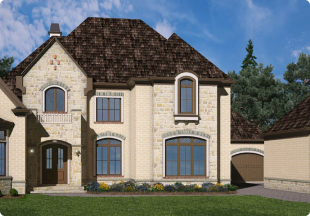
Transitioning between spaces should feel like an event. Incorporating stone-clad arches—both interior and exterior—softens the "heavy" look of stone while providing a sophisticated, rhythmic flow to the design. This is a hallmark of many European house plans that lean into the castle aesthetic.
Integrating Modern Amenities
A modern castle is only as good as its hidden technology. The challenge is to maintain the old-world aesthetic while providing every contemporary comfort.
-
Smart Security: Discreetly integrated surveillance and smart-lock systems provide the "fortress" security the style implies without visible hardware.
-
Indoor-Outdoor Flow: Unlike historical castles, which were closed off, modern versions use large folding glass walls to connect the stone-paved Great Room to a pool house or terrace.
-
Wine Cellars and Tasting Rooms: The lower level of a castle-inspired home is the perfect location for a stone-walled, climate-controlled wine grotto—a staple of any high-end estate.
Expert Insight: The Importance of Scale
"The secret to a successful castle-inspired estate lies in the balance of mass and light. While stone provides the 'mass,' the placement of oversized windows ensures the home feels inviting and ethereal rather than imposing and dark."

Finding Your Heritage Design
Building a castle-inspired home is about creating a legacy. Whether you are drawn to the rugged charm of French Country house plans or the refined elegance of a Tudor estate, the goal is a home that feels like it has always belonged to the land.
If you have a specific vision for your estate—perhaps adding a gatehouse or expanding the carriage house—our modification services can tailor any of our existing blueprints to meet your "royal" requirements.
Explore more luxury designs:
Are you looking for a design that emphasizes a sprawling footprint, or do you prefer the vertical grandeur of a traditional tower layout?


